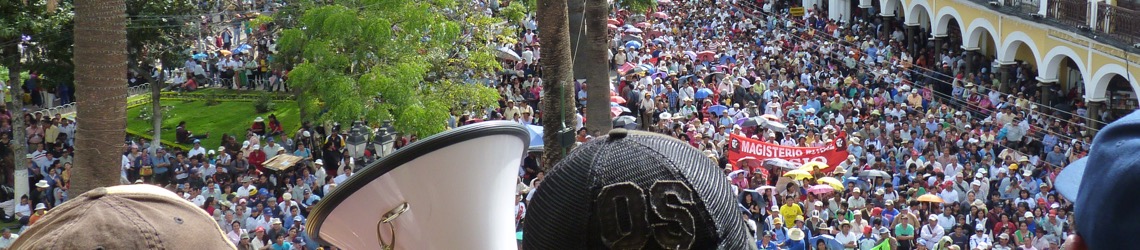
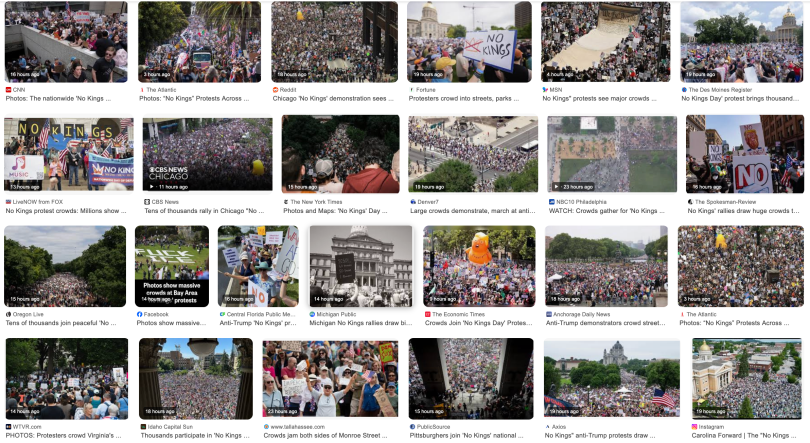
Grid of images of No Kings protests on June 14, 2025

No Kings protests were extraordinary. How exactly?

Americans, citizens and immigrants alike, protested on Saturday, June 14, in exceptional numbers as a wave of No Kings protests became the most widespread public repudiation of the second Donald Trump administration. These protests, which were undoubtedly energized by the standoff between Los Angeles-area communities and Federal troops, could mark a turning point from isolated protests to mass resistance.

Protests are called demonstrations for a reason. And these were displays of political strength for a movement that has a lot to prove: that it better represents the country than a president elected with a slim plurality in November 2020, that it is better able to capture public enthusiasm than an incipient fascist movement, and that it is undeterred by the state violence shown through military deployments, arrests of opposition leaders, and near-disappearances of a growing number of immigrants.

So what does success look like for a mass display of public will?

One simple metric is comparative: did a the anti-Trump movement out-organize and out-turnout their opponent. And here, the juxtaposition with Trump’s military parade — a celebration of the US Army’s 250th birthday on Trump’s 79th — will be unforgettable.

The King’s Parade vs No Kings Protest

News Eye (@newseye.bsky.social) 2025-06-14T22:36:16.034Z

But in a larger sense, protesters make a political statement through crowds (and yes, through many other kinds of actions, but June 14 was largely a day for crowds). When they succeed, that message is “indisputable in its overwhelmingness,” as Argentina’s Colectivo Situaciones described the protests that brought down three presidents on December 19 and 20, 2001. Through some alchemy of place, time, presence, voice, and action, crowds constitute themselves into the “The Voice of the People.” And assert that they, and not their government, will decide the future.

I want to use this occasion to share how those of us who study mass protest try to conceptualize just how protests achieve that kind of political impact.

Charles Tilly, who with various colleagues has probably done the most to examine the protest demonstration as political form, has a four-word summary of what protesters are actually demonstrating. And Tilly’s model is interesting in part because it situates demonstrations as just one form of collective political action (or “contentious politics”), alongside riots, strikes, revolutions, and among many other attempts at disruption or representation. Demonstrations are a social transaction where movements accept that a government system will persist, but where governments are moved to recalibrate their actions based on shifts in popular support and public mode. In that frame, Tilly et al. argue that protesters are engaged in displays of WUNC: worth, unity, numbers, and commitment.

  • Worth: Protesters present themselves as worthy of political participation, rather than exclusion from decisions about their own fate. This might be especially relevant for groups, from working-class laborers in the 19th century to women in the suffrage movements to minorities of various enfranchisement movements, who are formally excluded from participating in official politics. This is self-presentation as an argument that one deserves a place at the table.
  • Unity: Protesters come together and present a common voice. This may be the most basic element of what a common protest is, and everything from a speaker’s dais to roars of approval to marching side-by-side demonstrates this unity of purpose, both to participants themselves and to their audience.
  • Numbers: The size of a protest illustrates the larger capacity of a movement to catalyze political action, to show up again, and to influence democratic outcomes. When the 2006 immigrant protests promised, “Hoy marchamos, mañana votamos / Today we march, tomorrow we vote,” they were offering their quantitative weight to political actors that would accept their agenda.
  • Commitment: To a greater or lesser degree, protests demonstrate the willingness of participants to do hard things, to devote a share of their time to political action, and to make sacrifices for a cause. This is why long marches, gatherings in spite of rain or cold, and endurance of repressive violence—fire hoses, dogs, tear gas, projectile weapons—are so impactful. And why activists can create their own endurance tests—sit-ins, extended vigils, hunger strikes—to show others what they are willing to do.

What‘s great about this framework is that it doesn‘t just make sense of how movements have an impact, but also gives some sense of what goals organizers might have in choosing different protest forms.

But when I tried to understand the movements I have worked with, I came to feel that other dimensions were important as well. As I’ve written: “But what if grassroots movements see themselves not just as claimants before the state, but as a rival power to it? What if they claim a bit of sovereignty for themselves? The mobilized communities described here do use their unity and numbers to illustrate their claim to represent the public as a whole. To create the shared impression that “everyone” is part of a mobilization, however, they also highlight diversity among themselves and carry out geographically expansive protests. And they demonstrate effective practical sovereignty over urban spaces and persistence in the face of state violence.”

These are, I think, four new dimensions. A mobilization that claims sovereignty has worth, unity, numbers, and commitment, but is also diverse, widespread, irrepressible, and in control. What do these four adjectives mean?

  • Diverse: This includes and goes beyond the intersectional identities notion of diversity. Yes, it’s about including those oppressed, marginalized and excluded. It is those who were scorned claiming political voice. But also yes, it’s about joint action across lines of difference, showing people working together despite privilege and division. It is uniting to fight together. And yes again, it‘s about those sectors of society that have been pitted against each other finding common cause. It’s realized though unexpected juxtapositions: Teamsters and Turtles together at last, the office worker in a suit throwing back a tear-gas canister.
  • Widespread: Movements demonstrate their political significance by being ubiquitous: We are everywhere. At the height of their water privatization protests, Cochabambans moved to erect road blockades on every street they could find. And in the United States, we’ve seen a move since at least Occupy in 2011 to maximizing the number of protest locations. This was definitely a feature of the 2020 Black Lives Matter protests, possibly the most widespread protest mobilization in American history. Here in 2025, No Kings seems to have doubled down on this strategy, meaning that many metropolises could boast multiple urban and suburban protests on the same day: as many as fifty separate locations in the San Francisco Bay Area. Much of the celebratory sharing that happened yesterday was geographical, with images from places like Boise, Salt Lake City, or Hattiesburg (Mississippi) treated as mic drop moments.

Do you know how badly you have to screw up as a Republican to get this kind of turnout in IDAHO? #NOKINGS

Heather M. Collins🗽 (@heathersdesk.bsky.social) 2025-06-14T19:44:59.284Z

The last two elements of my list may just be at the horizon for the current protest wave in the USA, but they mark out where things could go as the protester–government standoff evolves.

  • Irrepressible: When a movement surges back in to the streets after repression, it showcases the limits of state power. This feeling is definitely significant right now, with these protests surging both in places where police and military violence was displayed over the past ten days, and showing up in new places in outraged reaction. Anyone who has been on the streets when police have backed down, or gave up their hold on even a block of the city to allow protesters to surge in, knows the electricity that goes through a crowd that has lost its fear and disempowerment. Finding ways to protest through, or in spite of, physical attempts to prevent you from doing so is a powerful political statement.
  • In control: Beyond that, lies the experience of protesters actually choosing what happens in the streets. Of public collective decisions on what happens next. This is why certain kinds of rallies and assemblies are uniquely empowering, because people choose on the spot what do, where to go, how to escalate, and whether to persist until their demands are one. The collective experience of direct action is its own unique form of self-empowerment.

The United States is a massive country with many cities, countless communities, and many, many places of gathering. It’s an exceptional challenge to walk forward through the different kinds of collective power sketched out here all at once. When face-to-face in one place we can get a sense of our potential, but we’ll need to find ways of keeping track of that across many settings.

Synthetic journalistic, movement media, and academic accounts can give us perspective, and I hope this outline of elements of power can help orient those accounts. Counting the number of locations, as being done by the Crowd Counting Consortium, is vital information. Yet summaries of crowd size and dispersion are useful, but also not enough. We need to thicken these accountings of where and how many with considerations of which alliances are emerging, which sectors of society are participating, and how daring and how contagious actions are. As well as what is working despite the kinds of force directed against it.

In the past, with thinner forms of communication and a greater reliance on centralized mass media, singular national protest gatherings may have been more important in building this shared sense of working together and achieving power. So did roving concentrated mobilizations, whether that was the trail from Birmingham to Freedom Rides to Selma to Chicago, or from Seattle to DC to Cancun to Miami. Now, in part because the adversary is more directly the national government, an Everything Everywhere strategy seems to be taking shape.
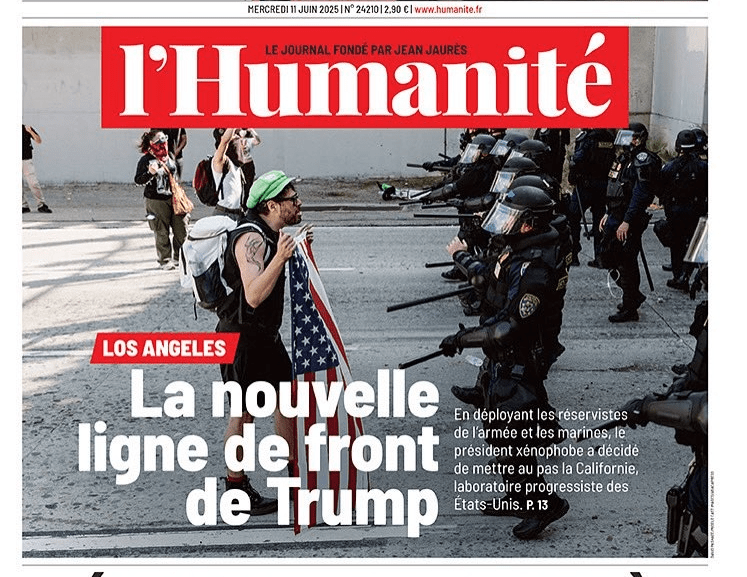
Front cover image from l'Humanité, a Paris newspaper. Shows a confrontation on a highway between black-clad soldiers and American civilians, one of them holding an American flag.

Resistance to Trump reaches its first turning point

“The Whole World Is Watching.” It’s been decades since American protesters chanted this sentence at American police in an effort to deter violence and brutality. But it has perhaps never been more true than right now. The political drama of the USA in 2025 has the world riveted, and I as I walked through the modern train station in Potsdammer Platz, built where the Berlin Wall once stood, the face offs, a pillar at the bottom of stairway brought the confrontation between Federal troops and Los Angeles protesters to life in the middle of Germans daily commute.

And without a doubt, Los Angeles marks a dramatic new turn in the authoritarian rollout of the second Trump Administration. After months of high-consequence policy changes and comparatively isolated forms of protest, the situation is shifting towards an open confrontation and nationwide resistance. The Immigration and Customs Enforcement (ICE) raids on everyday Angelenos have prompted a public reaction by a community that doesn’t have the luxury of waiting until November 2026. And the president’s long-advertised desire to confront protesters with the United States military is finally being realized.

Both the roundup of ordinary civilians and the militarization of American cities push beyond existing expectations. They embody the threat of a different country, one where freedom is utterly denied to a millions and dramatically curtailed for the rest of us.

Everything I’ve said so far is, I think, obvious whether one is within range of the tear gas, across town, across the state, or across the ocean. But that’s not why I write this post. Instead I want to share a bit of perspective as someone who spent a decade puzzling through the sometimes deadly and sometimes transformative dance between protest and repression, including how Bolivians flipped the most heavy-handed domestic military deployment into the forced end of a presidency.

First and foremost, state crackdowns like Trump’s deployment of the National Guard and the Marines are exceptionally risky moves for rulers. The repressor imagines that such a show of force will rapidly bring about a scene of submission: arrested or injured opponents, a fearful majority of the population, and a quieter country. But the truth is, there’s no single outcome when an unarmed populace faces down an armed military. And nothing demonstrates a government’s weakness more powerfully than when even its deliberately trained soldiers can not obtain compliance with its orders.

Second, a crackdown in one place can kick up either mass demonstrations of repudiation or many sparks of daring rebellion across the country. Or both, which is what the invasion of Los Angeles has appeared to do this week. Spreading out protests when repression is concentrated is a winning tactical approach.

Sometime in the coming days or weeks, American protesters will make the turn from a solidarity movement with Los Angeles to a national mobilization in defense of freedom and democracy.

Third — and these may be the two ideas I most want to share widely because they is not common sense to many Americans — widespread confrontational protest and massive shows of popular opinion are both essential, and need not be in competition with one another. In Bolivia, in Argentina, in Thailand, in Ukraine, in Egypt, and in Chile, people who succeeded in national political turns did both of these things. As seen this week, acts of confrontational action can deter or delay the mass detention and deportation of our neighbors; they also can hold space in times of protest. On the other hand, acts of mass participation literally demonstrate that the public rejects a government and its policies. They create moments of collective purpose that strengthen their participants and remind allies elsewhere that they are not alone, and that we can win. (See below the line for how I described them working together in Cochabamba, Bolivia.)

This month, and especially this weekend, people primarily oriented around one or the other of these goals will likely be side-by-side in the street. Those who define themselves around what I’ve called “The Tactical Argument of our time” (whether nonviolent action can/is better at/is necessary for/could never/is counterproductive to bringing about revolutionary change), may be primarily worried about whether their preferred tactical approach is being permitted or blocked. My suggestion instead is to consider how much more powerful this movement could be if both flourished. And then to do the work of both helping people stay safe(r) as they speak, act, and resist.

Solidarity from Berlin.


p.s. Here’s how I described these two sides of successful uprisings in my research on Bolivia:

To win, the Coordinadora had to wield mass pressure, establish its legitimacy, gain a seat at the bargaining table, and convince the government to completely reverse the privatization. The moment of mass pressure involved blockades and other disruptive actions to win the annulling of the contract. The moment of legitimacy consisted in convening assemblies, cabildos, and an unofficial referendum or consulta popular to register public opposition to water policies. … While pressure and legitimacy represent two distinct moments of the mobilization, they worked in tandem, like two legs walking: Road blockades organized across the city and the surrounding region built up into an overwhelming civic strike, while marches flowed together into large-scale meetings called cabildos, often held in the central plaza. The civic strike was the cabildo’s operative arm, its means of exerting pressure; and the cabildo was the strike’s brains and voice, the only place from which it could claim sovereignty. Without either, the Coordinadora and the Water War it fought, would have amounted to nothing.

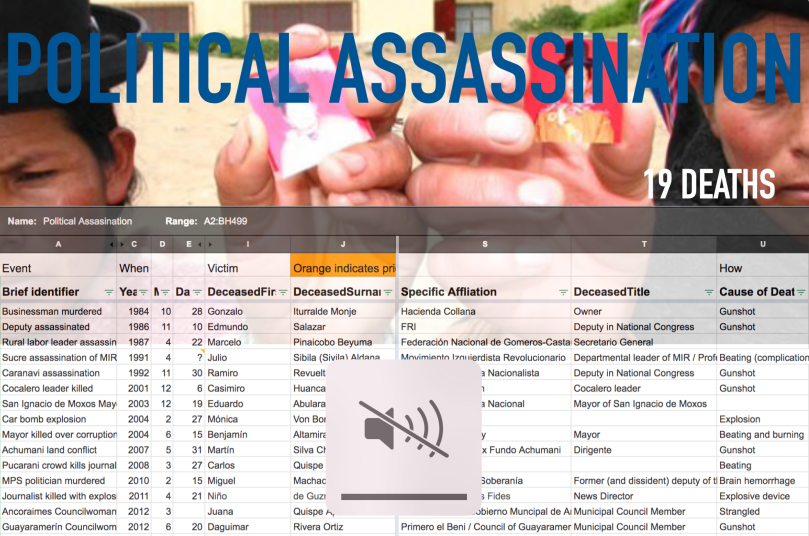
Introducing Ultimate Consequences: A digital archive on lethal conflict in Bolivia, 1982–present (video)

Introducing Ultimate Consequences, presented as video-on-demand at AAA 2022.

This presentation introduces Ultimate Consequences, a quantitative and qualitative database, unique in its depth and completeness of coverage, of all conflict deaths in Bolivia since October 1982, a period of largely elected governments and political dynamism. The country’s 1977–82 return to democracy, 1985 general strikes, 2000–2005 antineoliberal protest wave, and its political crises in 2006–2008 and 2019–2020 each exemplify the ability of mass disruptive protest to remake national politics. The database enables comparative analysis across twelve presidential administrations, four episodes where protesters successfully sought the end of a presidential term, and 192 protest events in 17 domains of conflict. Due to the number of lethal events in the study period, the dataset is both large enough for quantitative research that analyzes patterns and small enough for qualitative, journalistic, and historical examination of the individual deaths involved. To serve these multiple purposes, we are coding information such as individuals’ relation to a specific social movement, protest campaign, cause of death, responsible parties, and location, and writing detailed narrative descriptions about major events. The presentation introduces the open data format of the database and the R-based tools to explore it.

The project draws on journalistic, advocacy, and scholarly sources to comprehensively document all deaths in political conflict, including those not readily categorizable as human rights violations. The project also seeks to ask more intimate, and cultural, questions about the role of risk, violence, sacrifice, and loss in transformative social change. As the database reveals, Bolivian protest can involve intense risk, privation, self-sacrifice, and either enduring or inflicting violence. Bolivian social movement traditions include proclamations of fearlessness and vows to carry on their struggles “until the ultimate consequences,” that is, to persist in collective measures and to refuse to be deterred by deadly state violence. These movements invoke a history of indigenous uprisings, labor militancy, and state massacres in narrating their own histories.

The dataset offers a grounded view on such questions as: What practices and political choices result in some presidencies being far less violent than others? What is the relative importance of different forms of political violence, from repression of protest to guerrilla movements to fratricidal disputes among movements? Which movements have succeeded despite deadly repression? This presentation introduces a new tool for social scientists, oral historians, and human rights advocates to use in answering these and other questions.

Are we in the most widespread protest wave in US history?

As Black Lives Matter protests multiply across the country in the wake of the police murder of George Floyd, people are asking how to place the massive public reaction into historical context. Subjectively, the current protests can feel like another element in a long series of protests memorializing Black deaths at the hands of the state and private racist acts—“A decade of watching Black people die”—and simultaneously like “a watershed moment” that “changes everything,” as new and unexpected parts of US and world society are joining in the resistance to racism and police violence. It’s in that context that the first quantitative counts of the George Floyd protests are circulating now.

Writing in the Washington Post, Lara Putnam, Erica Chenoweth, and Jeremy Pressman call the current protest wave “the broadest in U.S. history” and note that, “People have held protests in all 50 states and D.C., including in hundreds of smaller, lesser-known towns and cities that have not been in the spotlight during previous nationwide protests.” Of course, “broad” is the a measure here because, so far, largest is off the table: many protest waves have involved larger overall numbers of participants and certainly there have been many larger single events than the impressive rallies this week, which have reached the tens of thousands in Minneapolis, Houston, Portland, San Francisco, Seattle, and Washington. And of course, no prior protest wave has had to overcome the challenge of pandemic-induced social distancing.

So the measure has become less about the sheer number of people involved, and more about the number and diversity of the locations we are showing up to protest. So how do we measure that and how can we be sure? Unfortunately, there is no single long-term data set on protest participation, despite the recent hard work of the Crowd Counting Consortium (CCC)—founded by Chenoweth and Pressman—since 2017. Before that time, we have to rely on historical and personal memory, which can often mean we forget the more distant past and discard events that don’t fit well into longer narratives.

The data from the CCC show events in 538 distinct US municipalities so far (and more are on the way). (To calculate this number, I ran a uniqueness filter on city and state from the May and June spreadsheets for George Floyd events.) A tracker from USA Today names 700 localities in the United States. These are very high numbers, but of course they reflect both the increased willingness and ability to rapidly organize protests and improved means for researchers to find them. Zeynep Tufekci makes a compelling call in her book Twitter and Tear Gas to avoid purely numerical comparisons across different decades: “seemingly similar outcomes

“seemingly similar outcomes and benchmarks—for example, a protest march attended by a hundred thousand people—do not necessarily signal the same underlying capacity to those in power when they are organized with the aid of digital technology as they do when they are organized without such supporting tools.

Tufekci, Zeynep. Twitter and Tear Gas: The Power and Fragility of Networked Protest. New Haven: Yale University Press, 2017, p. 192.

Instead of measuring outcomes, Tufekci urges us to look at the “onerous labor and deep organizational and logistical capacity to make things happen,” which had to be built before marches could exist in the 1960s, but which now tends to be constructed on site after a movement has gone viral and found one another in the streets. She proposes we should look at narrative capacity—“the ability of the movement to frame its story on its own terms, to spread its world view”; disruptive capacity to “interrupt the regular operations of a system of authority”; and electoral or institutional capacity “to keep politicians from being elected, reelected, or nominated unless they adopt and pursue” desired policies.

It may be too early to tell whether participation in 2020 is truly more widespread than in past events, or to measure the depth of commitment and sophistication of the current movement, but what I want to do here is lay out some other protest waves that we should have in mind when looking for comparisons:

Read More »

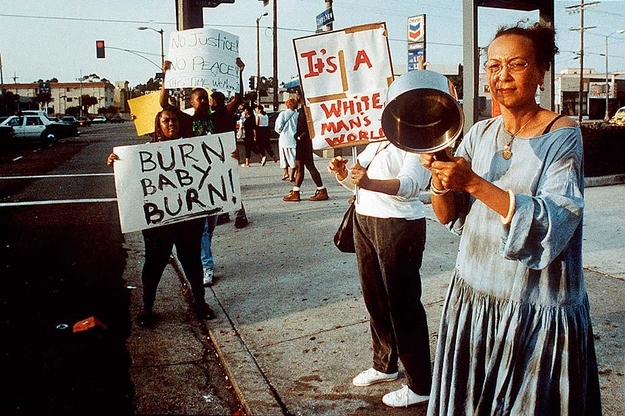
From “race riots” to multiracial urban rebellions (pt. 1: LA 1992)

1992

In 1991–92, the beaten Black man was Rodney King and the perpetrators were Los Angeles Police Department officers Stacey Koon, Laurence Powell, Timothy Wind, Theodore Briseno, and Rolando Solano. The fires began across Los Angeles on the afternoon of their acquittal.

The morning after the LA riots began, a trusted friend at my high school asked if I “beat myself up last night.” (I’m biracial.) Because that was the paradigm for understanding a Black-led uprising in response to police brutality: a race riot. As in Tracy Chapman’s “Across the Lines” (1988):

Little black girl gets assaulted
Ain’t no reason why
Newspaper prints the story
And racist tempers fly
Next day it starts a riot
Knives and guns are drawn
Two black boys get killed
One white boy goes blind

Choose sides
Run for your life
Tonight the riots begin
On the back streets of America
They kill the dream of America

On the streets of South Central LA, but above all at one intersection, Florence and Normandie, the antagonism of the first day did run on race line and target white, Latino, and Asian civilians for violence and humiliation. The beating of Reginald Denny, a white truck driver who was dragged from his trailer and beaten until his skull fractured, became the first national symbol of the riot, a chromatic negative of King’s beating made flesh. This brutal scenario had evolved out of a nearby confrontation with police earlier in the afternoon, but took on a momentum of its own.

In fact, “virtually all of the victims [at Florence and Normandie on that first day] were struggling Hispanic and Asian immigrants who spoke little or no English,” (per U.S. News) but the national narrative was set: “black rage, white fear,” as a New York Times headline would read on May 4, 1992. In any case, it was cast as a “race riot” — a term that can encompass and conceal many historical events under a single category: white massacres of post-Civil War freedmen communities (from Memphis 1866 to Tulsa 1921); genuine clashes of white and Black civilians aided by white-dominated police forces (Detroit 1943); and Black uprisings against police violence (notably the Long, Hot Summer of 1967). The framing of “race riot” conceals questions of power, authority, and domination within the guise of ethnic antagonism. The only question left in this frame in that posed by a distraught Rodney King: “Can we all get along?”

And yet, the six days of civil disorder in Los Angeles was many other things.

The anger and fearlessness and outrage were contagious and they spread widely. They targeted not just racial adversaries but first of all the police, and secondly an economic system that excluded many. On the same morning-after page of the New York Times that cast the riots as “racial disorder,” there was the account of a “rainbow of rage”:

Read More »

Añez government redefines “sedition” and “terrorism” in its mission to arrest Evo Morales

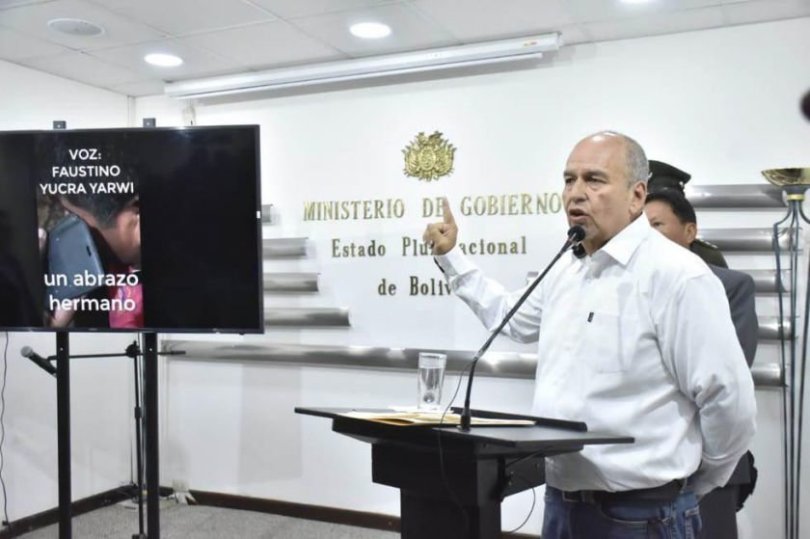
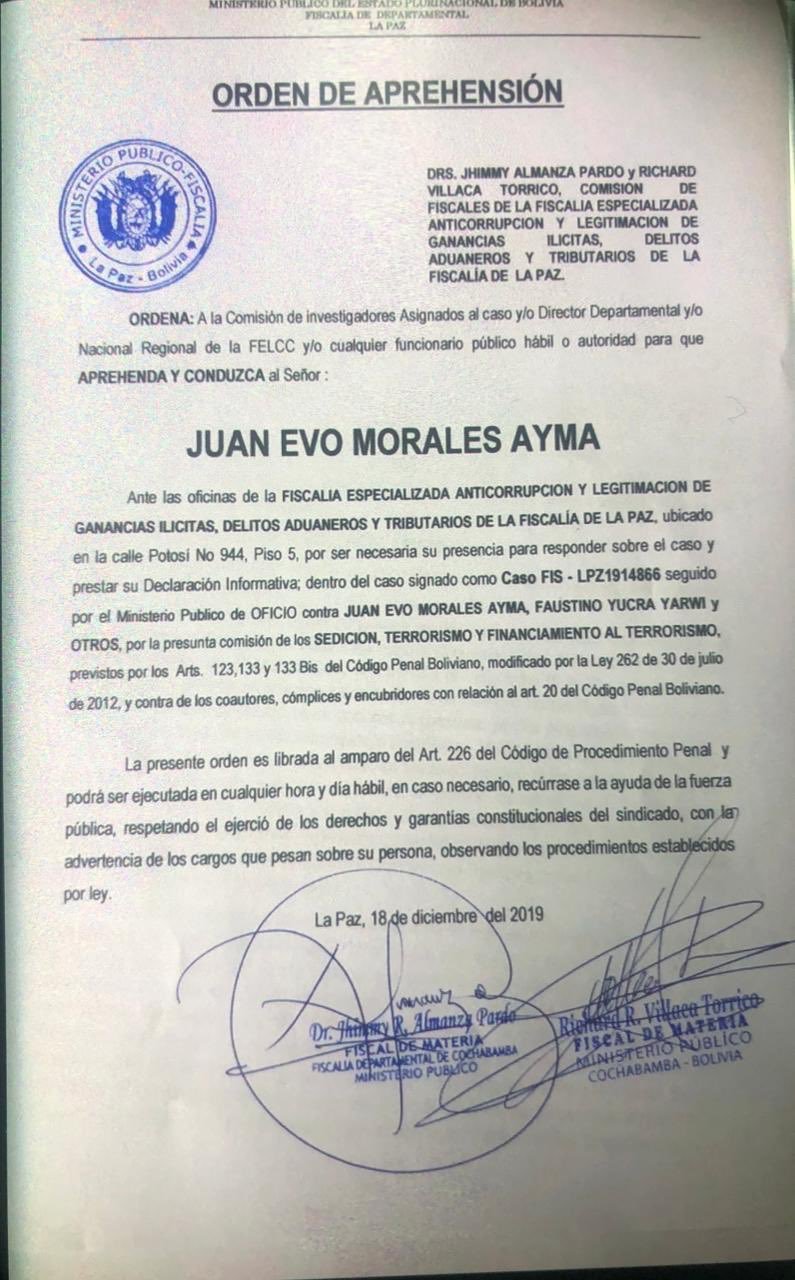
Today, December 18, the Bolivian government issued an arrest warrant against Evo Morales, charging him with sedition, terrorism, and financing terrorism, for his efforts to encourage and organize protests within the country after his November 10 ouster from the presidency of Bolivia. Specifically, the charges seem to stem from a single phone call between Morales and Faustino Yucra, the only named co-defendant in the arrest warrant and the initial investigative documents released in November (see below for details). The call was recorded in a cell phone video first revealed by Government Minister Arturo Murillo (photo above, by APG).

The December 18, 2019, arrest warrant for Evo Morales

The charges represent a dramatic, and extremely one-sided, redefinition of the basic contours of legality in Bolivia, where widespread mass protests frequently use road blockades as pressure tactics and demand the resignation of presidents, and where neither “sedition” nor “terrorism” have regularly been used as means to criminalize such political acts. Insofar as these charges are directed at Morales, three-times elected president and currently the “campaign chief” for his party in as-yet-unscheduled 2020 elections, they represent an attack on the country’s largest political party, the Movement Towards Socialism–Political Instrument for the Sovereignty of the Peoples. As signals of a new legal standard for protest, they represent a dramatic shift in the behavior of prosecutors that could criminalize common forms of protest. (Similar charges have been levied against demonstrators arrested in Sacaba and Senkata after their fellow demonstrators were massacred.) In both cases, the current government is overlooking the similar practices of the movement that challenged Morales for alleged electoral fraud in October and November, demonstrating a double standard that could compromise free and fair elections.

Read More »

Division in El Alto follows militant anti-coup protests

Following the forced resignation of Evo Morales last Sunday, El Alto has taken a unique path. The city of one million people maybe the most indigenous large city in the world: 76% Aymara and 9% Quechua in the lastest census. United in by the September and October 2003 protests, it ensured the downfall of Gonzalo Sánchez de Lozada, the last hardline Bolivian president to order deadly repression on a massive scale. Ever since, El Alto has a reputation for ethnic and working-class militancy. And yet this very militancy is often radically skeptical of political parties, prone to division, and adverse to being a pawn in others’ games.

And so, the city’s reaction to Morales’ overthrow has been complicated. Some angry crowds have circulated at night, targeting police installations, infrastructure, and other politically connected targets in self-proclaimed resistance to the coup. (An incendiary text by Ivan Apaza Calle, “They are not Evo supporters! They are Alteños, dammit!,” takes up this position.) As I’ve described on Twitter, these protest cut a wide swath of property destruction, especially on the first night of November 10. These attacks seemed destined to deepen divisions rather than unite Alteños in a common effort.

Other daytime protest events have mobilized “in defense of the wiphala,” but with more ambiguous views on President Morales himself. Judith Apaza wrote “So we can understand each other a bit…” from within this context.

A substantial but not overwhelmingly large cabildo of the mobilized, claiming to represent El Alto’s 14 districts and La Paz department’s 20 provinces met Saturday in El Alto. The gathering, which numbered in the low thousands, made a broad list of national and local demands, including the resignations of both Jeanine Añez and Soledad Chapetón.

The circulating crowds, property destruction and arson, have left other Alteños terrorized and there are many testimonial and interpersonal reports of neighborhoods dwelling in fear of overnight reprisals on them. For an example see, “El Alto overnight: Bolivia seems to be an animal that chases its tail.” This weekend, this perspective emerged into a public current of dissension from the stance of hardline mobilization. Alteños are divided between a pro-MAS-IPSP Federation of Neighborhood Councils (FEJUVE) and an opposition FEJUVE contestaria that organizes separately. Some of these divisions have already proved very costly in human lives, notably in the 2016 protest and arson at El Alto’s city hall, which killed six people.

La Razón reported Saturday:

Since that day [November 9], mobilizations with blockades began and there were actions by groups engaging in vandalism who burned almost all of the police stations.

In opposition, the alternate FEJUVE, led by Néstor Yujra, instructed [its constituents] to raise the wiphala in their homes and asked the neighbors to take actions to safeguard their homes, making it clear that the sector does not support any political party.

The lootings divided many neighborhoods. Hence, in many sectors, it was decided not to march or blockade.

The first to demonstrate their rejection [of the “citywide” blockade] were the neighbors of Villa Esperanza, who resolved not to participate in marches or blockades. They were followed in this determination by the Pacajes-Caluyo zone, whose inhabitants decided to go out and un-block the roadways. A similar decision was undertaken by the October 12 neighborhood. The Túpac Katari neighborhood, who de-recognized their [pro-blockade] leadership and Huayna Potosí zone (Porvenir sector) who rejected “being used by MAS partisans.”

Another sector resisting the mobilization by the FEJUVE leadership is District 3. There, barricades have been put up and every night there are vigils to safeguard the Integral Police Station, which is the only one that has not been burned down.

http://www.la-razon.com/nacional/Divergencias-surgen-El_Alto-respecto-movilizaciones_0_3258874098.html

El Alteño newspaper ran the headline “El Alto closes week of protest divided” today. It also reports that neighbors pleading for peace marched with white flags on the city’s Avenida Cívica. Aside from these demobilization initatives, there are statements and manifestos like this feminist text rejecting the “fascism” of Jeanine Añez while refusing any partisan takeovers of grassroots organizations.

Each region and city in Bolivia seems to have a different dynamic at the moment. Just as the national situation is reaching its bleakest moment yet, this pivotal city is working out its own longstanding divisions. It remains to be seen whether and how Alteños can claim the political initiative, and participate in an effective struggle to keep the gains they have won and reverse the damage currently being done.

The Palestinian protest camps in Gaza are world’s most daring protest

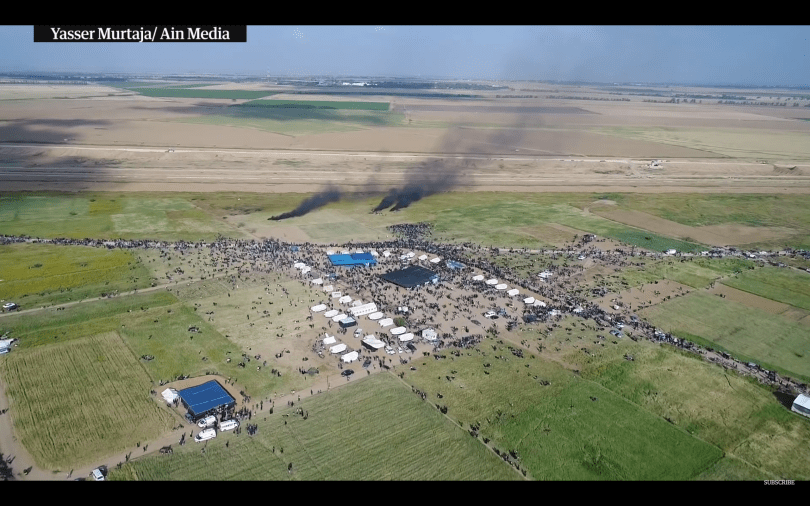
Today is the long-planned climactic day of the Great March of Return, a Palestinian protest on the fenceline of the Gaza Strip. On March 30, Palestinians set up five protest camps a half-kilometer from the Israeli military. These camps are themselves a form of mass protest, reminding the world that two-thirds of Gazans are refugees from towns, villages, and farms within Israeli territory. The protest’s chief demand is the Right of Return, their ability to freely return to their homes and/or to re-establish the communities they have maintained in exile for the past 70 years. Protesters are also demanding an end to the eleven-year blockade of Gaza, imposed in 2007, which has crippled the territory economically. The camps have been the staging grounds for weekly demonstrations, in which ten to thirty thousand protesters rally while at first hundreds, and more recently thousands of protesters have advanced into the unilaterally declared buffer zone along the fence. During these protests, unarmed Palestinians have thrown stones and flaming bottles towards the fence, and used a variety of tools to dismantle part of the wall that keeps them caged and isolated from the rest of the world.

Marchers, journalists, protesters engaged in confrontation and those who have peacefully approached the fence have all been subjected to an unprecedent barrage of violent force on the part of the Israeli military, who are positioned in towers and earthen embankments on their side of the fence. Israeli snipers have shot over 2,500 people and as of today, killed over fifty Palestinians. Yet week after week they keep coming.

The Great Return March in Gaza continues to be the most daring tactical encounter between protesters and security forces on the planet.

If you’ve seen the film Gandhi, you know the scene where people line up and risk beatings to defend their strike. Journalistic coverage of this march on the Dharasana Salt Works was a devastating proof the moral bankruptcy of British Rule in India. I’ve long said this could not be repeated when the opponent has deadly weapons. The Gaza protests have proven me wrong.

The Gaza protesters are unarmed militants, not satyagrahis. They are not arriving empty-handed but with stones in their hands. But they have injured no one on the Israeli side. They are deploying unequal means: inflicting symbolic damage while suffering brutal and deadly violence. And their response to that violence is not to switch to the deadlier means at their disposal (guns and rockets), but to keep coming back.

This is the dynamic of the Soweto Uprising, a turning point in the anti-apartheid struggle in South Africa. Unequal violence proved morally unsustainable for the regime, ultimately isolating it from its support system in the United States and Europe. The dynamic on the side of Israel and its backers remains unknown; will shooting thousands of essentially defenseless civilians provoke a moral reckoning? That choice is up to us.

You probably haven’t seen this protest from the inside. To do so, see the last footage captured by Yaser Murtaja, who was killed by Israeli gunfire in April. It offers a flash of insight into what the ongoing Gaza protests entail. Watch it.

After the break, four things you need to know about the protests…

Read More »

Bolivian police break up epic road blockade in Achacachi

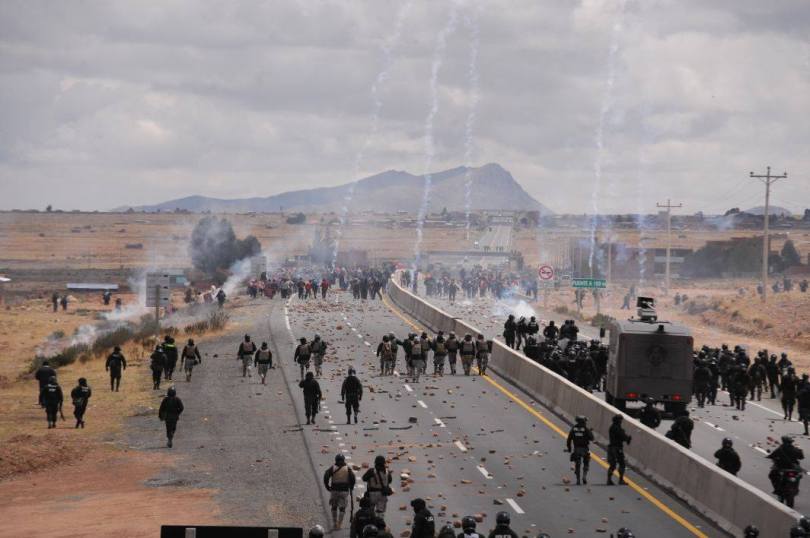
Early on Sunday morning, September 17, over sixteen hundred Bolivian police massed in the high desert plateau east of Lake Titicaca. Perhaps the largest police mobilization under the presidency of Evo Morales, these forces gathered to interrupt an extraordinary local protest that had blockaded roads and interrupted travel by road in the region for an unprecedented 26 days. The operation used its overwhelming numbers, police vehicles, and a substantial amount of tear gas to break up the Achacachi blockade. Over forty-five people were arrested, twenty-one of whom are being held without bail in Patacamaya and San Pedro prisons. The intervention looks to be a decisive turn in the municipality’s protests, which have been ongoing throughout 2017.

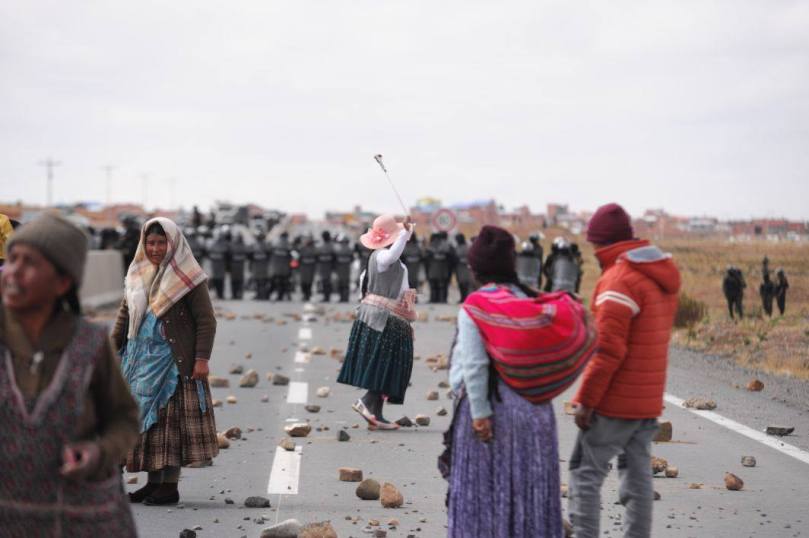
Woman with an Aymara-style slingshot faces off with dozens of riot police during their September 17 blockade clearing operation. This photo (and photo above) by Javier Alejandro Mamani (APG). See Gallery at Rimay Pampa.

The protesters, who have numbered in the thousands, are backing a demand that Édgar Ramos (of the governing MAS-IPSP party) step down as mayor of Achacachi municipality over allegations of corruption. That demand prompted protests in February, in which anti-Ramos demonstrators damaged the mayor’s property and his organizational allies in Achacachi city. In response, Ramos’ rural allies looted the city’s commercial district. In July, the national government advanced an investigation of the anti-Ramos forces, notably Achacachi Neighborhood Federation (Federación de Juntas Vecinales; Fejuve) leader Esnor Condori, but not of pro-Ramos forces. Reversing an earlier decisions to grant house arrest, a judge jailed Condori and two urban teachers affiliated with the movement, Pastor Salas and Gonzalo Laime, in San Pedro. The day after they were jailed, August 22, the blockade began.

In a remarkable month of mobilization, the mostly urban Achacachi protesters who began the blockade (in so far as a town of nine thousand people is considered urban on the Altiplano) both maintained steady control over regional roadways and built a surprising network of alliances. They were joined in protest by Felipe Quispe, the famed, but retired leader of the national peasant confederation CSUTCB, who is a native of Achacachi Municipality. They signed a pact of mutual support with TIPNIS community leaders still reeling from the August law that permits development in their territory. And on August 28, a march of Achacachi women descended from the Altiplano and El Alto to stand before the San Pedro Prison. Their signs read:

Damn those who defend corrupt mayors with their power.
Jail for this looter
Evo, listen: Your mayor is corrupt
“Malditos aquellos que con su poder defiende a alcaldes corruptos”,
“Cárcel para este saqueador”
“Evo escucha, tu alcalde es un corrupto”

The Achacachi women stayed in the capital of La Paz, staging regular demonstrations and setting up a sit-in blockade in front of the Ministry of Justice. Their mobilization seems to have built more surprising ties to parts of the Paceño population, while the highland traditionalist organization CONAMAQ Orgánica, regional labor federation COD-La Paz, and the traditionally radical teacher’s union all offered their support.

On Friday, September 15, these groups combined to hold a cabildo—a mass public meeting that can issue statements or coordinate protests—in the Plaza San Francisco, the traditional heart of grassroots protest in Bolivia, four blocks below the presidential palace in La Paz.

The cabildo termed itself “Achacachi Somos Todos” (We are all Achacachi) and managed to generalize the demands of the local movement, related to the mayor and the detained protest leaders, into “an Agenda that comes from the Aymara people to the whole country.” The six points of departure raised and approved in the cabildo include (1) the struggle against corruption, (2) the struggle against the politicization of the criminal justice system, (3) the right to dissidence and critique, (4) respect for individual and collective rights, (5) critical debate about the vision for Bolivia’s development based on local demands and perspectives, and (6) rejection of the instrumentalizing of indigenous peoples for political ends.

Achacachi municipality, particularly the smaller town of Warisata and the many Aymara rural communities that make up most of its population, was the point of ignition for the 2003 Gas War, and a key part of the rural mobilizations that preceded it. At that time, a thousand marchers from the Altiplano led by Felipe Quispe implanted themselves in the overwhelmingly indigenous city of El Alto (just above La Paz on the edge of the Altiplano plateau) and became an articulating force for collaborative protest. Today, Achacachi Municipality is divided along partisan lines (which are partially town/village lines), but its mobilization again seems to be bringing other movements together. It is very much an alliance of outsiders, those grassroots social forces that have had the harshest break-ups with the national government. But the process of connection among them should be watched closely as the Achacachi movement regroups from Sunday morning’s police intervention.

Broad Legitimacy for Road Blockades as Protest Tactic in Bolivia

Road blockades are a frequent form of protest in Bolivia, at many different scales. A small demonstration may claim a single roadway, or a coordinated effort can deliberately paralyze transport across an entire region. Sometimes small protests in just the right place can lead to big consequences. Bolivia is one of the most highly mobilized countries in the world in terms of protest: In a 2012 national survey by LAPOP (the Latin American Public Opinion Project), just under 17% of 2,999 people polled said they had taken part in a protest in the last 12 months. The 508 who said yes were asked if they had blockaded a road or other public space, and 229 confirmed that they had. In other words, one out of every 13 adult Bolivians polled had taken part in a road blockade. Asked in the same year whether they approved of different kinds of political action, Bolivians rated blockading a bit lower than simply demonstrating, but ahead of creating a political party.

In 2002 and 2004, LAPOP asked Bolivians a more incisive question about road blockades:

“Sometimes there are protests that provoke difficulties because the streets are closed. In those cases, what should the government do? A veces hay protestas que provocan dificultades porque se cierran las calles. En esos casos, ¿qué debe hacer el gobierno?

The result was overwhelming: Large majorities (76.48% in 2002; 71.89% in 2004) chose “Negotiate with the protesters although this may take days or weeks, affecting the economy of the country” over “Order the police to open the roads.” (Negociar con los manifestantes aunque esto pueda tardar días o semanas, afectando la economía del país vs. Mandar a la policía para abrir los caminos).

Add to this the fact that the ruling political party, the Movement Towards Socialism–Political Instrument for the Sovereignty of the People emerged from the Chapare cocalero movement, which frequently used blockades as a protest tool. And that it came to power in 2005 on a wave of unrest that was powered by blockades and sparked into national revolt in Achacachi. And that road blockades were also a frequent tool of the grassroots left in the 2006–09 struggle against a separatist right-wing movement in the east of the country.

Accordingly, the Morales government has often approached blockades with tolerance on the ground. It’s the exceptional application of intensive force to break up a blockade that attracts well-deserved attention: the 2010 police raid on the Caranavi blockade demanding a citrus plant, the 2016 effort to break up blockades by the cooperative miners federation, and this week’s operation in Achacachi. The first two efforts had deadly consequences: two townspeople were killed in Caranavi, and five miners and one Vice Minister died in last years confrontations. While the current operation caused no fatalities, it represents an important break point between the government and a movement that had been a solid part of its broad grassroots base until now.


Bolivian Ombudsman sues to prevent doctors from going on strike


Taking one more step in the Bolivian government’s slide away from socialism, the Defensor del Pueblo (Human Rights Ombudsman) has successfully petitioned a court to limit the right of Bolivian workers to go on strike. The workers in question are doctors affiliated with the Colegio Médico, who carried out a two-day work stoppage in protest of a government decree turning medicine into “free affiliation” profession, analogous to anti-union right-to-work laws in the United States.

Defensor David Tezanos Pinto filed the suit in the name of the right of the public to health, but the move cuts against the grain of strong pro-labor elements of Bolivian political culture, some of which date back to 1936. The right to strike was reaffirmed in the 2009 Constitution, and the court ruling that resulted is equivocal on the appropriate balance between that right and the public interest in access to medical services. The ruling stipulates “the Colegio Médico’s obligation to guarantee the right to health in normal conditions for all uses of the public health service when they exercise their ight to strike | El deber garantizar el derecho a la salud en condiciones de normalidad en todos los usuarios del servicio de salud público por parte del colegio médico a tiempo de ejercitar su derecho a la huelga.”

After the ruling,  Tezanos threatened further lawsuits against future protests on May 30, suggesting that transit drivers on strike and protesters using road blockades could be targeted. Blockade of highways are a central form of protest in the Andes, and many other places across Latin America. The current government owes its existence to extensive social unrest using blockades from the 1980s onward in the Chapare and from 2000 to 2005 across Bolivia. More recently, Tezanos has stepped back from his earlier threats, stating on Twitter that “The Constitution protects health services, limiting medical strikes, guaranteeing the right to strike in other sectors.”

Tezanos is the first Defensor appointed from within the Movement Towards Socialism party, which has governed since 2006. Under Bolivia’s previous political turbulence, the long term of the Defensor and the fractiousness of the National Congress has kept this important role somewhat independent of the ruling party. This lawsuit is the latest action leading some Bolivian’s to question whether that independence will continue under Tezanos’ leadership. For Inter-Union Pact leader José Luis Álvarez, the latest action “criminalizes the strike and social protest.”

This week, the Departmental Workers Center has stepped up a campaign to demand Tezanos renounce his action and back the right to strike. An alliance of workers, doctors, neighborhood councils, rural irrigation users, and others is preparing a march on the matter for June 26.

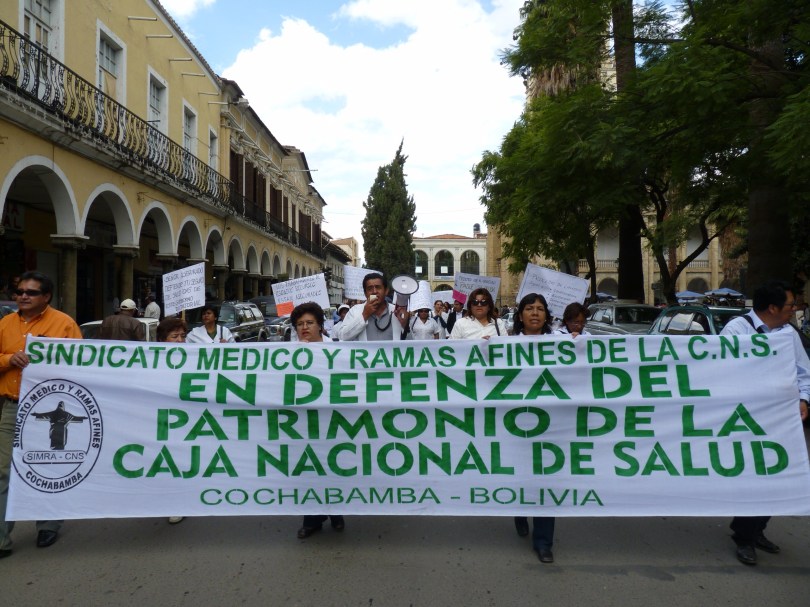
Image: Bolivian medical workers on strike in Cochabamba, April 2011.