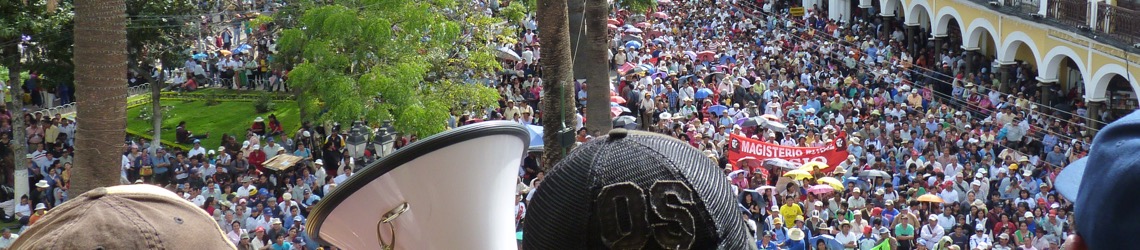
Chaos grips Bolivia as votes are counted, president ignores early results, and opposition smells fraud

Also on this site: Analysis of how the electoral results so far: “Understanding the end of the Evo Morales majority.”

Over six million Bolivian voters cast their ballots in peace on Sunday, October 20, but the calm did not last through the next day. As of Sunday night, all indications—including both the official electoral authorities’ “rapid count” (Transmisión de Resultados Electorales Preliminares; TREP) and private quick counts by ViaCiencia and Tu Voto Cuenta all coincided in showing a strong showing by challenger Carlos Mesa, and a narrow 4 to 7% lead by incumbent president Evo Morales, whose vote count stood at 45%, according to TREP. Unless Morales pulled ahead to a 10% lead, he would face a second round runoff against Mesa in mid-December.

Then, at 7:40pm local time on Sunday, the TREP rapid count stopped updating.

This was the first post-electoral sign of irregularity, and technically it only affected a non-decisive preliminary count, but it reached a Bolivian public that was on edge and concerned with the possibility of fraud or electoral manipulation. The president’s entire 2019 campaign was conducted in defiance of the majority vote that denied him constitutional authorization for a fourth term on 21 February 2016. Ultimately, permission to run was granted by the Plurinational Constitutional Tribunal in December 2017. Periodic protests have urged “defense of the results of 21F,” although without impact. In the final weeks before this year’s vote, massive public meetings—called cabildos—were held in Santa Cruz, La Paz, Cochabamba, Potosí, and Tarija, all pledging to defend democracy in the event of manipulation or fraud, and upholding 21F. That portion of the Bolivian public opposed to Morales was watching suspiciously.

On Sunday night, Carlos Mesa gave a not-quite-victory speech celebrating the runoff as a major accomplishment. President Evo Morales also gave a victory speech, claiming an unprecedented fourth victory at the polls (while true on its face, this had never previously been either attempted or permitted by law), and expressing confidence that late breaking rural voters would hand him a first-round victory. The publicly funded newspaper Cambio, whose editorial line is partisan advocacy of Morales’ Movement Towards Socialism—Political Instrument for the Sovereignty of the Peoples (MAS-IPSP), took its cues from Morales and proclaimed outright victory the next morning. Communication Minister Manuel Canelas joined in expressing “We are quite confident in the final result of the count.” To suspicious ears, this all sounded like foreshadowing for a manipulated result.

On Monday, the official count results trickled in, reaching 50% by late afternoon. By Tuesday morning, the Plurinational Electoral Organ was reporting 73% of the votes had been counted. These official results showed a Mesa lead on Monday, and a very narrow race as of this writing: at 7:43am, Morales has a 42.30% to 41.74% edge.

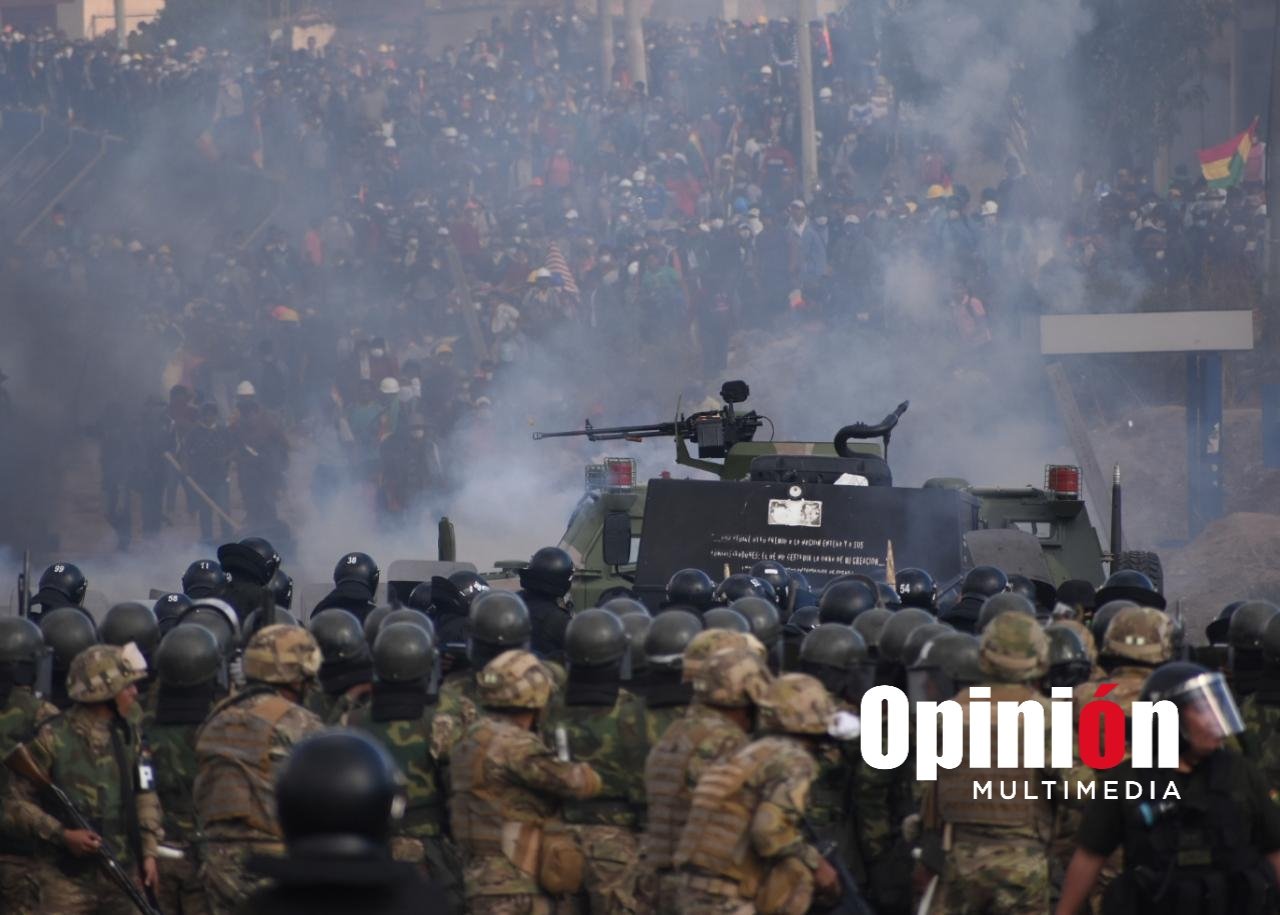
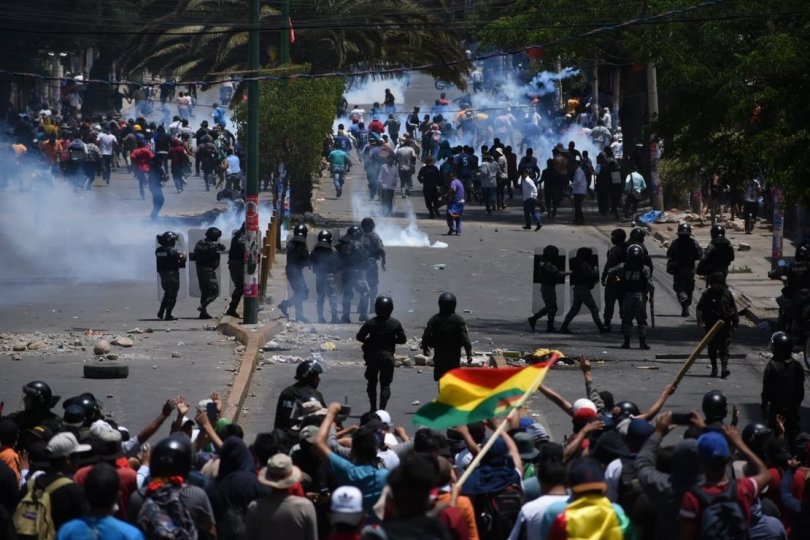
The central story of Monday, however, was not these vote totals, but the unraveling confidence in electoral authorities and nationwide mobilizations by critics of the government. By mid-day, Carlos Mesa, civic committees, and the National Coordination in Defense of Democracy were all calling for vigils at the sites of departmental vote counts. Protesters were also outraged by discoveries of caches of ballots marked in advance for the MAS-IPSP in La Paz and Potosí. By evening these became large, and sometimes chaotic protests. In some places, these protests faced off with MAS-IPSP partisans. In Sucre, capital of Chuquisaca department, enraged protesters set fire to a series of offices, including the Departmental Electoral Tribunal, MAS-IPSP campaign offices, and the campesino federation. Confrontations and fires were also reported in Potosí and Tarija. By the end of the night, electoral authorities had suspended vote counts in four departments—La Paz, Potosí, Chuquisaca, and Cochabamba—citing the protests as justification.

The events of Monday night were driven not by these slow-moving official results, but by sudden and unexpected changes to the TREP rapid count. After a 23-hour pause, the rapid count website roared back into action. Shocking the country, TREP soon read: Evo Morales 46,86% — Carlos Mesa 36,72%, a 10.14% margin that would mean no runoff. This switch, apparent official endorsement of a first-round victory for Morales, was the spark that turned the protests from guarding against irregularities mid-day to protesting or resisting fraud by nightfall.

Ironically, the protests themselves became a (sometimes reasonable) pretext for pausing parts of the official count. And the damage to vote counting installations and ballots themselves is likely to complicate the possibility of independently auditing the results. In a further irony, the TREP rapid count tilted away from Morales last night. By 11pm, it read Evo 46.40% — Mesa 37.07%, close enough for a runoff.

Right now, the rapid count is a hair’s breadth from requiring a runoff, the official count is partial, but it indicates a runoff may be needed. However, doubt, tension, and mobilization are all working together in a feedback loop that could lead to suspended vote counting. Should the Plurinational Electoral Organ announce anything other than a runoff, the opposition is unlikely to accept the results. Years of growing distrust and the lack of trusted and fully independent electoral and judicial institutions have led the Bolivian government to the brink of a serious legitimacy crisis.

Evo Morales remains the favorite, but Bolivia faces first uncertain election in Plurinational era

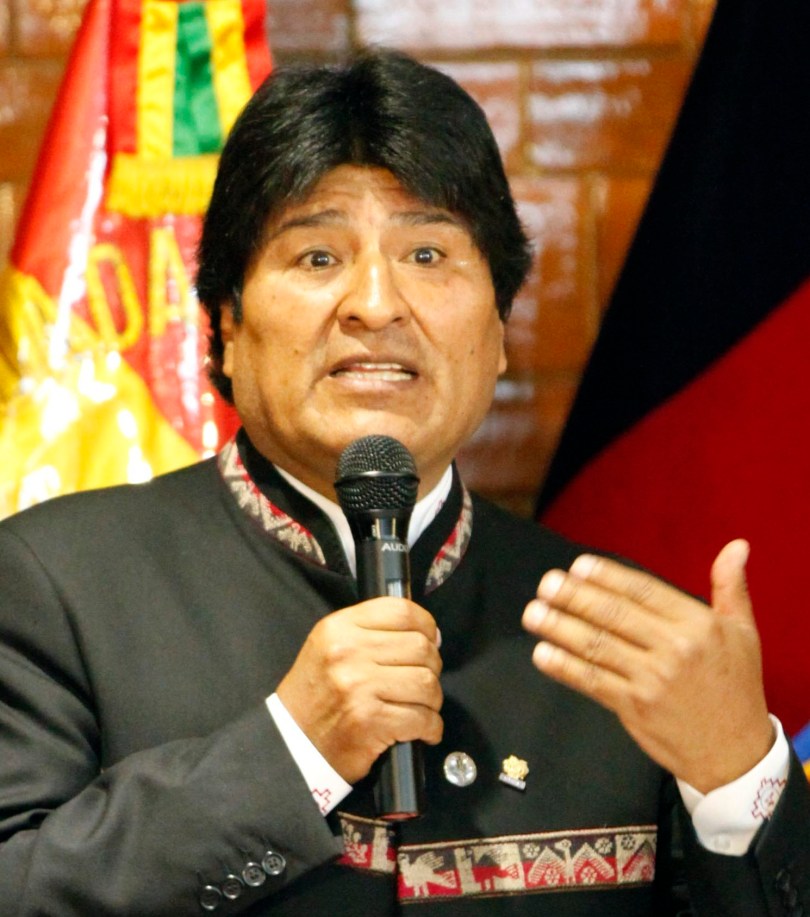
Evo Morales’ bid for a fourth term as Bolivia’s president will be put to the test when voters go to the polls on Sunday, October 20. All signs point to the most competitive presidential contest since 2002, when the future president narrowly lost to Gonzalo Sánchez de Lozada, the architect of neoliberalism in Bolivia. After grassroots protests ousted Sánchez de Lozada in 2003 and his historian-turned-Vice-President in 2005, Evo Morales swept to power with a decisive majority in a December 2005 special election. Since then, Morales’ Movement Towards Socialism–Political Instrument for the Sovereignty of the Peoples (MAS-IPSP) has dominated national and municipal politics in the country, and never dipped below 48% support on a national ballot.

Morales is now the longest serving president in Bolivian history, but polls, past electoral results, and an extraordinary series of pre-election protests point to his extraordinary vulnerability this time around. Even though Morales retains a solid base and a significant lead in the polls, he may not clear the threshold for a first round victory, and could face a competitive runoff with Carlos Mesa a month later.

To understand the uncertainty in the election, you must first know the ground rules of the vote. Under the 2009 Constitution, presidents are elected by popular vote. In the initial round of voting, a candidate who receives over 50% of the votes cast (for a candidate), or who receives 40% and holds a 10% advantage over the 2nd place finisher is elected president. Otherwise, the top two finishers face off in a new head-to-head vote. Current polls agree that Morales and Mesa will finish first and second, respectively, but differ as to whether a runoff will be triggered.

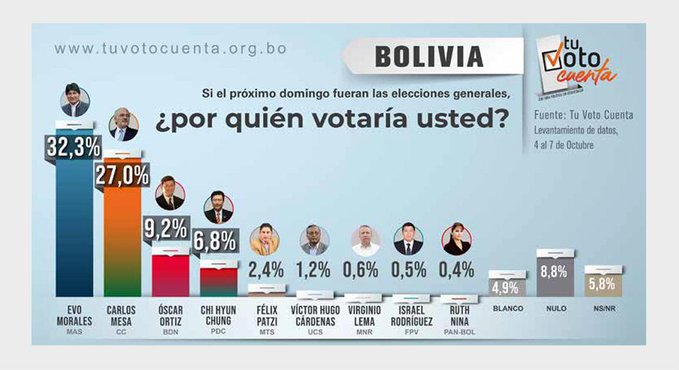
Bolivian public opinion polls vary widely in quality and consistency. Historically, some have concentrated their samples in the more accessible urban corridors and underestimated the MAS-IPSP vote, which once had overwhelming rural strength. This year, however, a research team at the Universidad Mayor de San Andrés (La Paz’s famed public university) produced a poll with an extraordinarily large and geographically representative sample called Tu Voto Cuenta (“Your Vote Counts”). Their most recent results are shown here:

If accurate, Morales’ 32.3-27.0 margin would neither clear the 40% threshold nor the 10% minimum difference, even after excluding blank, null, and unsure votes as the electoral authorities will do in their calculations. Another poll by CiesMori shows a wider lead, 36.2-26.9. Discarding the neutral votes, this puts Morales just above the numbers needed to avoid a runoff.

Read More »

Santa Cruz cabildo: Bolivian fires prompt right-leaning region to mobilize “in defense of the land”

On Friday, October 4, the Santa Civic Committee (Comité pro Santa Cruz) convened what will almost certainly prove to be the largest political gathering in Bolivia this year. Estimates of the crowd, while unverified, hover around one million people, including large numbers bused in from outside the city. Sixteen days before the 2019 presidential election, this “Cabildo for democracy and the land” follows in the footsteps of regional cabildos in 2004 and 2008, at a time when the department of Santa Cruz was the leading center of opposition to the grassroots left movement in the country and to indigenous president Evo Morales.

Now fifteen years after the first major cabildo put proposals for autonomy and federalism (that is, the devolution of national powers to the level of Bolivia’s nine departments; the analogue of states in the USA), the same movement has reconvened and added new demands to platform. First, the Santa Cruz movement remains a pole of opposition to Evo Morales, but it now frames that opposition in terms of defending the democratic vote cast in the February 21, 2016 referendum, when 51.3% of voters denied Morales the right to run for a fourth presidential term. The Cruceño movement views the judicial and electoral decisions to allow Morales to nevertheless participate in the October 20, 2019, election as illegitimate.

But the cabildo, and the election, have been reshaped by the ecological crisis of the Bolivian fires this year. While every year sees deliberate burning of future agricultual lands in Bolivia, the fires this year spread into a regional disaster of unusual (if not unprecedented) proportions. Over the past ten weeks (and these figures are likely underestimates since they run through September 25), fires have consumed over 5.3 million hectares of Bolivia’s land, and some 3.9 million hectares in Santa Cruz alone. This is over 10% of the department. Nearly all of the 2 million hectares of forest that burned was inside the department, including at least one sixth of the Chiquitano dry forest (1.4/8.6M ha) has burned in the last two months. Cruceños have watched as news of the disaster came in daily, including devastating losses in twelve natural protected areas and the deaths of five people engaged in fighting the fires.

On one hand, the political fallout has been predictable: existing regional grievances that divide Santa Cruz from the federal government have been reactivated. These fall into there areas: Cruceños (at least as led by the free-market-oriented, agribusiness-connected elites) perceive themselves as culturally and politically distinct from the more Andean, indigenous, and socialist central government. Their government and administrative officials have long chafed at the centralization of the Bolivian state. And, the tensions around racial identity spark hottest around the steady migration of Aymara- and Quechua-speaking highlanders to both urban and rural Santa Cruz. Which is to say that economics, administration, and race are all part of the conflict.

Now add the fires to the mix.

Read More »

Manifesto of Mesa 18, the “rebel session” at the 2010 Tiquipaya Climate Summit

In April 2010, as the Bolivian government hosted the World Peoples’ Summit on Climate Change and the Rights of Mother Earth in Tiquipaya, movements within the country pressed for a forum to talk about these how the environment is treated within the country. The tens of thousands of summit attendees had their conversations structured around 17 working groups or “mesas” (literally, tables) on topics from ºthe root causes of climate change” to forests to the rights of Mother Earth. The Bolivian indigenous federations CONAMAQ and CIDOB proposed Mesa 18, an eighteenth working group on domestic environmental problems in Bolivia.

As the summit approached, they and the government got into a very public dispute with the over whether it would be included. Officially, the five Pact of Unity organizations—including CONAMAQ and CIDOB—were co-hosting the Summit, and they met to formally approve the structure of the meeting. Nonetheless, Evo Morales and the Foreign Ministry vetoed any discussion of “internal matters” in an official track. “I don’t know why we’re talking about Mesa 18,” Foreign Minister Choquehuanca blistered as the press questioned him about the issue.

In the end, Mesa 18 was held two blocks outside the gates of the Universidad de la Valle campus, separate and apart from the official sessions. CONAMAQ, four smaller indigenous organizations, one campesino federation, and the Landless Workers’ Movement joined environmentalists and academics to organize two days of sessions before an audience of hundreds of people. Dozens of community groups presented their experiences and concerns about the impacts of “the extractivist development model based on the export of hydrocarbons, hydroelectricity, mining, agribusiness, and lumber” (in the words of a Mesa 18 promotional flyer). These conversations took place in a room with simple concrete floors, a borrowed Brazilian restaurant. Many of the sessions were offered twice, first at the Water Fair commemorating the tenth anniversary of the Water War and again in Tiquipaya.

Called the “rebel” session by the press, Mesa 18 drew a spotlight on the “double talk” of the government, as critiqued by leaders like CONAMAQ’s Rafael Quispe: “This government speaks of respect for Mother Earth, but it simultaneously pollutes the land, and there are the cases of Corocoro, Mutún, the San Cristóbal [mining] company, and projects like Cachuela Esperanza [a planned hydroelectric dam], which also damage the Earth.” Like its official counterparts, Mesa 18 consisted of dozens of short presentations on environmental threats, projected on a screen. A small team compiled the issues presented and formulated a resolution on behalf of the gathering. They declared, “the development plans of these governments, including Bolivia’s, only reproduce the developmentalist schema of the past” and called instead for “the peoples to decide directly the destiny of their natural wealth in accord with their own organizational structures, their self-determination, their own norms and procedures, and their vision of the holistic management of their territories” (my translation, see text below). Outside Mesa 18, participants covered a brick wall with placards in preparation to march. Each detailed a different environmental crisis or contradiction. Unlike the official sessions up the road, these results were not included in the Tiquipaya People’s Accord that concluded the week, but the collective document advanced the same environmental critique, denouncing “mega-infrastructure projects … extractive projects, water privatization and militarized territories.” The massive scale of the summit had offered an opportunity for national visibility around the country’s growing series of socio-environmental conflicts.

Nine years have passed and Mesa 18’s concluding resolution, called the Final Manifesto of Table 18 in Defense of the Peoples and the Earth / Manifiesto Final de la Mesa 18 en Defensa de los Pueblos y la Tierra, has slipped off the internet. I post the complete version below for future reference. A PDF version of the Manifesto is available here.

Read More »

Boliviaʼs newest park, Ñembi Guasu, hit by fires

The ongoing fire crisis in the Eastern Bolivia department of Santa Cruz has burned 187,800 hectares of the Ñembi Guasu Area of Conservation and Ecological Importance, scorching forests and leaving behind burnt out wildlife carcasses. The destruction in one-sixth of the Ñembi Guasu comes just four months after the Guaraní Charagua Iyambae autonomous government designated the park as protected on April 29, 2019.

According to reporting from El Deber, the Fires started in Roboré municipality, which has received much of the local attention during the ongoing Chiquitano dry forest fire crisis. But Charagua is the worst-affected municipality in the country, with 239,073 hectares burned according to recently released satellite analysis from the Fundación de Amigos de la Naturaleza.

El Deber reports the fire rages uncontrolled:

Today, it is the largest fire in the country; the only one that no one has taken care of up til now. Since August 9, when a chaqueo [slash and burn fire] got out of control 15 kilometers from Roboré, the flames have devoured land, reaching over 100 km away… and spilling over as far as Paraguay, towards Otoquis [Park] and still no one has done anything to put it out.

Hoy es el incendio más grande del país; el único que nadie ha atendido hasta ahora. Desde el 9 de agosto, cuando un chaqueo se descontroló a 15 kilómetros de Roboré, las llamas han devorado más de 100 kilómetros en línea recta, 187.800 hectáreas hasta ayer, ya se ha desbordado hasta Paraguay y hacia el Otuquis y aún nadie hace nada por apagarlo.

Pablo Ortiz, “Nadie atiende el incendio de Ñembi Guasu: el área protegida más joven,” El Deber, August 27, 2019.

The current fire in Ñembi Guasu stands as a potent metaphor of the risks that agricultural deforestation poses to both indigenous autonomy and conservation. Unless they have the resources to defend the territory, manage disasters, and shape policy, so-called Protected Areas will remain unprotected.

FAN visualization of fires in 2019 in Santa Cruz department

Deforestation in Bolivia: The bigger picture

The image above, produced by the University of Maryland’s Global Forest Change explorer, shows the loss of forest in Bolivia and surrounding countries from 2000 to 2018. As the fires continue to burn in Bolivia’s Chiquitano dry forest in Santa Cruz department, as well as in Beni, Pando, and Cochabamba departments, it’s important to take a longer look at the problem of deforestation in Bolivia. This post discusses its scale, hot spots, and how the current trend will break Bolivia’s climate pledges to the international community.

Deforestation is an ongoing, massive problem in Bolivia

According to official figures by the Bolivian government, deforestation exceeded 200,000 hectares (494 thousand acres) in 11 of the 13 years from 2004 to 2017, the last year for which I could find data from ABT, Bolivia’s Forest and Lands Authority. Here are their annual estimates.

Read More »

Like Brazil, Bolivia is burning due to deliberate government policy

With the world’s eyes turned towards the fires in the Amazon rainforest, and primarily on Brazil, there is good reason to survey the larger problem of deliberate deforestation across South America. Right now Bolivia is several weeks into the most devastating season of fires in at least a decade. As of August 22, the Bolivian government reported that 744,000 hectares of the country were affected by the blazes, and by Saturday, August 24, the regional government of Santa Cruz raised that estimate to over one million hectares.

A key driver of the fires in both countries is the deliberate clearing of forest land for agricultural production, which has been prioritized by left-wing government of Evo Morales as well as the right-wing government of Jair Bolsonaro. Last week, both presidents reacted flippantly to the growing international attention surrounding the fires. (On August 19, Morales called the fires “natural phenomena” that “will continue” in years to come and seemed preoccupied with avoiding blame: “This is not the first time that there have been fires, they have always been around. Now they want to blame Evo Morales for the fires.” ) After the fires became a key discussion point at the G7 meeting, and following growing protests demanding international aid in eastern Bolivia, however, both men have attempted to show their governments are proactively responding to the emergency. Nonetheless, government policy in Brazil and Bolivia is fueling and authorizing the underlying drive to convert more of primary forests into croplands and grazing fields for cattle. This fact has been widely recognized for the government of Bolsonaro, who defied environmental regulators on his own private property before taking office, and who has dismantled environmental protections as president.

Unfortunately, the same policy priorities are at work in Bolivia under President Evo Morales. While from a different social class, as the leader of the Chapare coca grower’s union, Morales shares a similar orientation towards the forests of their respective countries. Both men see the Amazon rainforest (and in Bolivia’s case, the Chiquitano dry forest as well) as underpopulated areas of land that ought to be incorporated into the national economy through production for the market. (Contrary to some wild-eyed  Twitter claims, however, the current fires in Bolivia are in the service of cattle and lowland export crops like soy, not coca.)

In 2013, the Morales government laid out its territorial vision as part of its 2025 Patriotic Agenda, a thirteen-point series of goals whose target date is the bicentennial of Bolivian independence. The plan, describing “how we want our beloved Bolivia to be” in Morales’ words, proposes an ambitious reterritorialization of Bolivia that will affect large portions of the country’s land surface, with millions of hectares altered by new agricultural, hydrocarbon, and infrastructural initiatives. It offers quantitative targets for the use of Bolivia’s land, water, and natural resources. In writing the plan, Bolivian government planners worked on a wide canvas: the full area of Bolivia’s national territory, which consists of nearly 110 million hectares and land and domestic waters.

The most dramatic shift proposed in the Patriotic Agenda is the so-called “expansion of the agrarian frontier”: increasing the total land under cultivation from 3.3 million hectares (in 2013) to as many as 13 million hectares by 2025. This staggering figure has been put forward by the president, vice president, and ministers, but their reach exceeds their grasp. The technical data used by the government’s planning staff, according to Fundación Tierra researcher Enrique Castañón Ballivián, corresponds to a still-startling 6-million-hectare cultivated area. Nearly half of the projected expansion would come in the eastern department of Santa Cruz, where soy (and soy oil)-exporting agribusiness dominates the economy. Costañón argues that this expansion would inevitably clash with indigenous collective titles, as well as forested areas.

While this agricultural land goal seemed unrealistically ambitious at the time, it has set the direction for Bolivia’s forest and land management agencies and for new decrees like the one that set off the current fires in the Chiquitanía.

Read More »

Fires rage in Brazilian Amazon, Bolivian Chiquitanía, Paraguayan Pantanal

This image from NASA offers a panorama of the fires raging across South America during the week of August 15 – 22, 2019. World attention has turned to the Amazon rainforest fires in Brazil, where ultra-right President Jair Bolsonaro has drastically cut back environmental enforcement. This week, there has been needed attention brought to Bolivia’s rapidly expanding fires, primarily in the Chiquitano dry forest. Claire Wordley offers a solid primer on the situation in English.

As of August 22, the Bolivian government reported that 744,000 hectares of the country were affected by the blazes, and by Saturday, August 24, the regional government of Santa Cruz raised that estimate to over one million hectares. These are parallel crises, caused by independently set fires. A key driver of the fires in both countries is the deliberate clearing of forest land for agricultural production, which has been prioritized by left-wing government of Evo Morales as well as the right-wing government of Bolsonaro.

Read More »

In the field: Building a database of deaths in Bolivian political conflict

Earlier this month, I spent ten days in La Paz working on Ultimate Consequences: A database of deaths in Bolivian political conflict during the democratic era. This project is a compilation of detailed information about the human cost of political struggle in the country I have been research and writing about for over a decade. It includes people killed when movements challenged the state and the state responded with violence—the initial spark for my research—but also a variety of deaths associated with coca erradication and resistance to it, deaths caused and endured by guerrilla and paramilitary forces, prolonged inter-ethnic conflict (mainly the “war of the ayllus” between the Laymi and Qaqachaka communities), political assassinations (both due to partisan politics and patriarchal rejection of women coming to forma leadership), and the times when self-sacrificial protest (hunger strikes and prolonged marches under adverse conditions) claimed the lives of protesters and their children.

As of today, we have 512 deaths recorded, 477 of them with names. It has been a grim, if captivating tour through recent Bolivian history. While I’ve had the collaborative support of two research assistants over the course of the project, I think I’ve read every story of death, and the process has been at turns sobering, enraging, frustrating, and deeply informative.

Right now, I am focused on getting two things done with this database: ensuring that our dataset is as complete as we can make it, and making several of the many variables that we are recording—starting with location and the role of the state—as completely specified as possible so that we can share complete summary data, maps, and other statistical visualizations with the public. In La Paz, this meant taking my camera on a lot of trips to the Archive of the Plurinational Legislative Assembly, which has decades of Bolivian newspapers bound into massive volumes, and coordinating with colleagues in a Bolivian NGO on a graphic visualization front-end for the database.