Martin Luther King on riots and property destruction

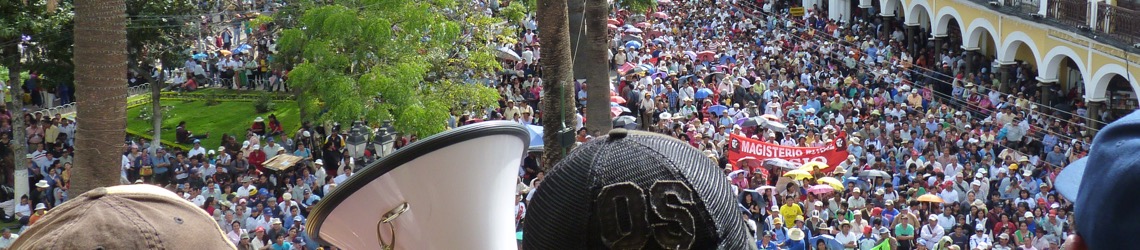
Martin Luther King Jr. was an extremely committed proponent of nonviolent and nondestructive methods of protest. In his private strategic manifesto inside the Southern Christian Leadership Conference, A New Sense of Direction,* he advocated “militant” and “defiant” action to dislocate the function of American cities and enforce a popular demand for economic redistribution, but he did not deviate on this tactical direction. He even declared, “I, Martin Luther King, take thee, Non-violence, to be my wedded wife, for better or for worse, for richer or for poorer—this isn’t a bargaining experience—for richer or for poorer, in sickness and in health, until death do us part.”

Still, the King of 1967 and 1968 would hardly be at home among some of the critics of property destruction who often revere him. First, he draws a strong moral distinction between “violence against property” and “violence against persons.” And second, rather than prioritizing rooting out property destroyers for obscuring his message, he tries to explain their message. Third, he is careful to emphasize police responsibility for most violence against people during the riots.  I quote him here at length describing the Black urban riots of summer 1967, the third consecutive summer of riot waves, largely touched off by local police violence. The following was first published in The Trumpet of Conscience (1967).

This bloodlust interpretation ignores one of the most striking features of the city riots. Violent they certainly were. But the violence, to a startling degree, was focused against property rather than against people. There were very few cases of injury to persons, and the vast majority of the rioters were not involved at all in attacking people. The much publicized “death toll” that marked the riots, and the many injuries, were overwhelmingly inflicted on the rioters by the military. It is clear that the riots were exacerbated by police action that was designed to injure or even to kill people. As for the snipers, no account of the riots claims that more than one or two dozen people were involved in sniping. From the facts, and unmistakable pattern emerges: a handful of Negroes used gunfire substantially to intimidate, not to kill; and all of the other participants had a different target—property.

I am aware that there are many who wince at a distinction between property and persons—who hold both sacrosanct. My views are not so rigid. A life is sacred. Property is intended to serve life, and no matter how much we surround it with rights and respect, it has no personal being. It is part of the earth man walks on; it is not man.

The focus on property in the 1967 riots is not accidental. It has a message; it is saying something.

If hostility to whites were ever going to dominate a Negro’s attitude and reach murderous proportions, surely it would be during a riot. But this rare opportunity for bloodletting was sublimated into arson, or turned into a kind of stormy carnival of free-merchandise distribution. Why did the rioters avoid personal attacks? The explanation cannot be fear of retribution, because the physical risks incurred in the attacks on property were no less than for personal assaults. The military forces were treating acts of petty larceny as equal to murder. Far more rioters took chances with their own lives, in their attacks on property, than threatened the life of anyone else. Why were they so violent with property then? Because property represents the white power structure, which they were attacking and trying to destroy. A curious proof of the symbolic aspect of the looting for some who took part in it is the fact that, after the riots, police received hundreds of calls from Negroes trying to return merchandise they had taken. Those people wanted the experience of taking, of redressing the power imbalance that property represents. Possession, afterward, was secondary.

A deeper level of hostility came out in arson, which was far more dangerous than the looting. But it, too, was a demonstration and a warning. It was designed to express the depth of anger in the community.

King was not an proponent of these tactics, but he was a prominent voice (at times, the most prominent voice) of his community when they were carried out. Rather than devote attention to their ”obscuring the message,” he sought to analyze their message, even as he argued such tactics would not prove victorious. I wish those who follow in his strategic footsteps on these tactical choices, would also follow him in prioritizing such explanations.

* “A New Sense of Direction” was one of King’s last overall strategic reflections before his assassination. It was delivered at a SCLC staff meeting and its private audience allowed for additional candor. It should be required reading for people seeking to understand King’s strategic vision. For more on King’s late political evolution, see Michael Eric Dyson’s I May Not Get There With You.
TIPNIS Corregidors plan national march, local resistance

Update, 29 March: My full English translation of Resolution 1 now appears after the jump.

The traditional leadership of 40 or 41 communities in the Isiboro Sécure National Park and Indigenous Territory (TIPNIS) met this past weekend in Gundonovia, a community inside TIPNIS. With their offer to Evo Morales to attend and negotiate rejected, the meeting focused on their strategy to respond to the after-the-fact consultation law (Law 222) passed in January.

Two key decisions emerged from this weekend. First, TIPNIS communities will participate in a Ninth National Indigenous March, under the leadership of the Confederation of Indigenous Peoples of Bolivia, which is set for April 20, and whose starting point and route will be chosen in a CIDOB meeting on March 25–26. Second, the TIPNIS communities are essentially declaring Law 222 null and void for being passed without their consultation, for violating the constitution, and being destructive to their rights. Or, in the words of their resolution:

To reject Law 222 and to emphatically reject its implementation, for being a norm that was not consulted and that is illegal and unconstitutional, which violates the rights of indigenous peoples, the territorial and collective rights established in various national and international norms that form part of the Constitutionality Block established in the [Bolivian] Political Constitution of the State.

Further, the assembled indigenous communities rejected both the new government military presence in TIPNIS and the strategy of official gift-giving that seems to be a campaign to approve the road. They contrast the process with the national and international norm of free, prior, and informed consent:

That this law [222] was not previously consulted with the three peoples who inhabit TIPNIS; is not free, but rather is being imposed by force; is not informed, insofar as there is manipulation of information concerning the reach and effects of this law, which are hidden by the state; and that same state never shared with us all the information about this project, and does not deal in good faith because the State seeks to include persons who have renounced their rights to decide over [the fate of] the lands collectively titled to the communities of TIPNIS, and finally does not seek any accord or consent.

Most significantly, they formalized a pledge to resist the law’s implementation from their communities, warning that “vessels and means of transport … will be subject to decommissioning and consequent destruction by the corregidors and communal authorities.”

The meeting was slightly smaller than expected for two reasons: difficulties in representatives of 15 communities arriving due to government restrictions on boat fuel (the government classifies it as a “cocaine precursor” and obstructed sale) and other unspecified pressures from the government. TIPNIS leaders expect these fifteen communities to fully participate in the march and local resistance. The remaining eight communities seem on the verge of ending collective land rights, dividing up their territory, and joining the cocalero-union affiliated communities in CONISUR.

full resolutions (in Spanish) after the jump

Read More »

Data points on tactics and revolution

An article by George Lakey is circulating around the Internet* under the headline, “The More Violence, The Less Revolution.” While title is a quotation from 1930s radical Bart de Ligt, the thrust of the piece is to read Erica Chenoweth and Maria Stephan’s large-scale study Why Civil Resistance Works (website) under this headline. Chenoweth and Stephan do make a serious and wide-ranging attempt to measure the outcomes of tactical choices made by movements, and both their data and conclusions should be read widely among people interested in changing their societies. Chenoweth and Stephan’s expansive category of civil resistance is actually one that spans across existing internal debates in the Occupy Movement (and earlier generations of tactical debates in the global justice movement and elsewhere). Vitally, their analysis of what conditions make civil resistance successful can help us focus our tactical conversations in a very productive direction.**

George Lakey, while an opponent of both violent tactics and property destruction, issued a strong rejoinder to Chris Hedges’ The Cancer in Occupy, arguing: “The issue of the appropriateness of property destruction and/or violence is, like any other aspect of community organizing, not settled by blanket statements or posturing but by getting in there and dialoguing, over and over again.  Advocates of nonviolent action need to learn from the Civil Rights movement and the field of community organizing in this way—there really aren’t any shortcuts.” Lakey has developed a nuanced, historically informed position on nonviolence. His strategic approach to thinking about nonviolence that has been surprisingly contagious internationally. And Lakey is willing to have difficult conversations with people who profoundly disagree with him, to his credit.

However, Lakey’s headline and overall argument are a misreading of Chenoweth and Stephan. This rankles me both as a social scientist (quibble ahead) and as a student of/participant in freedom struggles. First, the quibble: Why Civil Resistance Works and related studies divide all struggles into “nonviolent” (like the first Intifada, Lavalas against the Duvaliers in Haiti, the Velvet Revolution in Czechoslovakia, and the Defiance Campaign in South Africa) and “violent” (like the Mexican, Chinese, Algerian, and Iranian Revolutions). 0 for “nonviolent,” 1 for “violent.” (Incidentally, I think my four examples on each side of the “nonviolent”/”violent” categorization is a fairly good representation of successful cases, biased towards things anyone reading this blog would probably recognize. A complete list is in the Methodological Appendix [pdf] they posted online.) A dichotomous variable (definition) cannot be used to produce the more x, the less y statements. Ever.

Okay, so the real problem here is the made plain by the wide, wide variety of things crammed into the nonviolent category, including nearly all of the tactical patterns Lakey and those citing this study through him are most likely to rail against inside of movements: confronting police with bricks and stones (Intifada), building burning barricades in the streets (Defiance campaign), yielding the moral high ground by defending against violence rather than showcasing differences in suffering. Both such militant, but ultimately civil revolutions and nearly pacifist mobilizations like Solidarity in Poland or the Velvet Revolution have much to teach us about how to resist.

Read More »

Indigenous survey tour reports broad local opposition to highway in TIPNIS

As the Bolivian government sat down with CONISUR in La Paz, there was a crucial missing party: the Subcentral TIPNIS, the titleholder to the collective lands that make up all of the Isiboro Sécure National Park and Indigenous Territory except for the colonized Polygon 7. The Bolivian government was unwilling to formally exclude the Subcentral and its national parent organization, CIDOB, but instead invited it to send representatives within 48 hours (CIDOB did offer to meet in Trinidad, in 20 days). The Subcentral’s absence from these negotiations is perhaps the most enigmatic aspect of the latest turn of this kaleidoscopic conflict, but it has a simple, practical explanation.

While CONISUR marchers advanced towards La Paz, the Subcentral TIPNIS and CIDOB were on their own tours through the communities of the National Park. One delegation headed by CIDOB President Adolfo Chávez travelled the Isiboro River; a second, headed by Subcentral President Fernando Vargas visited communities on the Ochoa River; and a third went along the Sécure River. Last week they made a preliminary report that 32 of the communities they visited were firmly against the proposed Cochabamba–Beni highway crossing through TIPNIS, three others supported the road, while Oromono and Ushve, located in the north section of the territory were divided on the issue. The Subcentral-CIDOB tours also are laying the groundwork for a new national march (CIDOB’s Ninth National March) in protest of the highway. Fernado Vargas reported that there are 31 communities left to visit, eight of which are in the colonized southern region.

The results so far refute claims by the MAS government that CIDOB and the Subcentral lack contact with base communities, and far surpass the government’s assertion that they represent just 20 of the 64 communities in TIPNIS. The logistical coordinator of last year’s march has also confirmed that residents of 64 communities participated in the long trek to La Paz, although some may have joined after the march’s departure from Trinidad due to organizational difficulties. The results are also consistent with radio-transmitted interviews with TIPNIS communities conducted by the Erbol community radio network following the passage of Law 222.

The logistics of this poll are also a reminder of the existing methods of transport inside of TIPNIS and of the pace required for a comprehensive consultation of its communities on anything. River transport is the predominant form of contact between TIPNIS communities, one which is adapted to the landscape and geographic placement of communities. While proponents of the interdepartmental road have suggested that access to health, education, and development will come from ending TIPNIS communities’ isolation, the road will not in fact reach most communities directly. Indeed, when the pro-road CONISUR marchers met with Evo Morales, [he rebuffed their requests for local branch roads] that will connect their communities to the highway, citing a lack of funds. Accessible health care and education require not a highway (which will also bring deforestation and increased narcotrafficking), but meaningful state investment in facilities that are accessible by the TIPNIS indigenous’ own highways, the rivers that flow through the Territory.

Pablo Solón speaks out for meaningful consultation on TIPNIS

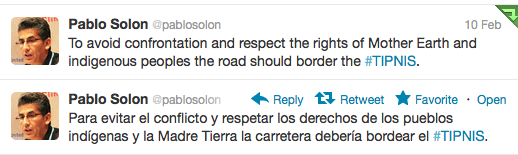
Pablo Solón, Bolivia’s former Ambassador to the United Nations, has been a critical global voice on behalf of the new Bolivia. He worked to secure critical global victories like the UN General Assembly’s recognition of the human right to water and sanitation, and to advance the frameworks of harmony with nature and the rights of indigenous peoples on the global stage. When plurinational Bolivia took a principled stand challenging collective inaction and market-based pseudo-solutions in the Copenhagen and Cancún climate talks, he was the country’s most eloquent voice (see, for example, this op-ed from Cancún). His diplomacy combined the capacity for principled opposition (Bolivia stood among three dissenters in Copenhagen, and alone in Cancún) with tenacious work to build a majority (140 nations joined in backing the right to water). Solón is also committed to diplomacy among movements, supporting indigenous and environmental movements’ access to negotiations in Copenhagen, attending the US Social Forum in 2010, and co-organizing the World People’s Summit on Climate Change in Cochabamba. In September 2011, just after the police raid on the pro-TIPNIS Eighth National Indigenous March, he publicly called on Evo Morales to rethink his position on the Villa Tunari–San Ignacio de Moxos highway, arguing, “One cannot speak of defending Mother Earth and at the same time promote the construction of a road that will harm Mother Earth, doesn’t respect indigenous rights and violates human rights in an ‘unforgiveable’ way.”

Now that the TIPNIS conflict has been reframed by the government’s passage of a so-called “prior consultation” law, Solón is adding is his voice on what “consultation” should mean. (Elsewhere, he has emphasized the existence of alternate routes for the highway, as well.) The following is a complete translation of a February 13 blog post by Solón on the subject:

Last Sunday I was at Erbol [Bolivian community radio network] being interviewed by its director Andrés Gómez, and conversing about TIPNIS and the consultation. Suddenly, I said to him: “How about if I come and ‘consult’ with you about amputating your arm.”

He responded, “Ah, no! Not that!”

“And what if I tell you that only in doing that can your life be saved.”

He responded, “Well, that is different”

And I replied, “But then I have to demonstrate to you that the only alternative that would save your life is to amputate the arm”

That’s how it is,” sighed Andrés.

The construction of a highway that cuts through the heart of TIPNIS is like amputating an arm. Before proceeding to consult with you as to whether I should amputate or not, I have to demonstrate that it is the only option, that there is no other choice, that without it any integration whatsoever between Cochabamba and Trinidad is impossible, that any other alternative is riskier, not technically viable, or financially unsustainable. It’s not right for you to accept losing an an arm unless I first put all the options on the table. This is the case with TIPNIS.

They want to have a consultation without first having realized a serious analysis of the alternatives for integration by road.

The obligation that comes before any consultation whatsoever is to bring together a commission in which all participate: the TIPNIS indigenous, the representatives of Cochabamba and Beni, the national government, experts on engineering and the environment. This commission is to bring us in a reasonable period an analysis of all the possible routes for integrating Cochabamba and Trinidad by road, together with their costs, impacts on indigenous communities, and on our Mother Earth. Once we have all these alternatives, then on that basis, it is possible to conduct a responsible consultation.

There are those who say that to go alongside TIPNIS or any other option is not viable. Perhaps they are correct… but this has not been demonstrated. Therefore, what is appropriate is to analyze, without passions or caprice, all the options. The result of the study o the different options will perhaps lead us to the conclusion that there is another option, or there are various other options, and that it is not necessary to conduct a consultation to see if TIPNIS should be cut in half, or it will lead us to a consultation to decide clearly between one option or another, knowing the pros and cons of each one.

What one cannot do is to “consult” with someone as to whether their arm should be amputated or not, without showing them the other options.

Debating Tactics: Remember to ask, “What works?”

Our tactical debates should solve protesters’ problems, instead of dividing movements

In the midst of Yet Another Tactical Debrief, this time on the recent Move-In-Day–turned—street-semibattle—then—mass-arrest at Occupy Oakland, I ended up tossing out on Twitter a cluster of successful movement moments, some of which involved fighting back against cops—Stonewall, Cochabamba Water War, anti-apartheid defiance campaign, Tahrir Square 2011—and others of which involved a calculated refusal to fight back, even to the point of enduring direct state violence: anti-nuclear demos, the 1980s Central America solidarity movement, Gandhian salt march. In my estimation, every single one of these was successful, which raises the question of what they had in common.

What these moments do not share in common is their achievement of a universally correct balance of nonviolence and forcefulness, self-sacrifice and safety, or daring and accessibility, but rather their solution to an immediate and tangible tactical problem which had been totally disabling to their movements. Without these solutions, the trajectories of their movements were towards frustration with the possibilities of action, and thereby to spirals of apathy and spurts of ineffective outrage. With them in mind, the trajectories shifted to hopeful emulation, contagious optimism, and surges in new participation, leading to a whole new scale for participation.

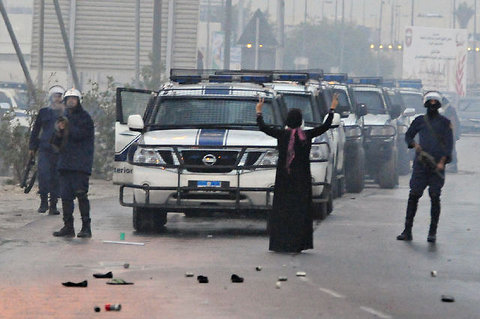
The Miami Model is a global problem (as the New York Times acknowledges for Bahrain), how do we work out a solution?

(very long post follows the break)

Read More »

Ignored options for Beni highway would protect TIPNIS

Update, March 4: The Bolivian Highway Administration’s (ABC) recent call for a “technical debate” on the highway route makes for headlines that sound like this impasse might clear. But the framing continues to exclude all of the meaningful alternatives presented here. ABC administrator José King continues to discuss alternatives for only Segment Two of the highway, between Isinuta and Monte Grande. Isinuta is on the southern boundary of the park (!). (ABC’s map with these cities is here) Of course, he can then insist that other alternatives that start from Isinuta cut through more forest than the proposed route. Meanwhile, despite eight months of demands to suspend construction, ABC continues to build Segments One and Three of the road (the pause, reported here, seem to have been resolved by mid-February). Until that construction stops, the only sensible read of the situation is that the Bolivian government has no intention of consulting the indigenous on the overall route of the road.

This map, produced by Cochabamba daily newspaper Los Tiempos, is the most important omission from the new round of debate on TIPNIS. It was reposted yesterday by Bolivia’s highly respected former Ambassador to the United Nations, Pablo Solón (@pablosolon). The map shows shows four options to the currently under-construction route that will divide the Isiboro-Sécure Indigenous Territory and National Park in half, and which is protected to accelerate deforestation in the park, leaving 64% of it deforested within 20 years.

Map of four options to the Cochabamba-Beni highway through TIPNIS

Nowhere in the recent debate has the government put these options on the table. The Prior Consultation law, formally promulgated by Evo Morales this week, does not allow a regional discussion on these other paths. Why is the government maintaining such silence? Why is it not interested in other routes? There are three possible reasons: 1. The ink is dry on a the loan-and-construction contracts with Brazil, so the government would prefer to avoid any further complications. 2. Close allies of the government in the cocalero movement will benefit from the soon-to-be-deforested land made accessible by the road, and from a second illicit export route in a way they would not from the alternate routes. 3. The government wants to illustrate that head-on opposition from grassroots groups will not change its policies on economic planning, and so is being rigidly inflexible on re-routing the road outside of TIPNIS.

Solón and TIPNIS communities have both vocally called for alternatives to be placed on the table. It remains to be seen how much mobilization will be required for this to happen.

Pablo Solon tweets for alternate route for TIPNIS highway

TIPNIS: Government to authorize not-so-prior consultation

Following the arrival of the CONISUR march in La Paz, the governing MAS party shifted its public position towards being an arbiter between indigenous groups in TIPNIS. After welcoming CONISUR march, President Evo Morales and MAS legislative leaders backed away from CONISUR’s proposal to simply revoke Law 180 protecting TIPNIS. Instead, they coalesced around a new legislative initiative: a “prior consultation” law on the issue.

Prior consultation is a fundamental principle of indigenous rights, and an important part of the environmental review process. In the case of the Villa Tunari–San Ignacio de Moxos Highway, currently under construction, consultation with indigenous communities has been anything but prior. Indeed, no consultation was pursued at all on Segments I and III of the highway, despite some complaints from the Multiethnic Indigenous Territory I, which is crossed by Segment III. Negative environmental reviews were avoided by the firing of Vice-Minister of the Environmental Juan Pablo Ramos in 2010, and the official responsible for TIPNIS in the National Protected Area Service, Vladimir Ortolini, in October 2011.

Now with Segments I, III, and a small portion of Segment II under construction, the government proposes a public consulatation with indigenous peoples inside of TIPNIS. The consultation is to be authorized under a new law, which has already passed the Senate and has been reviewed without change by the Chamber of Deputies’ Constitution Committee. The consultation will be organized by the independent electoral branch of the Bolivian government, be conducted under the norms and procedures of indigenous governance, and take place in five languages. The issues at hand are:

  • “Consideration and definition of whether the Isiboro Sécure Indigenous Territory and National Park is an intangible zone, and about the construction of the Villa Tunari – San Ignacio de Moxos highway.” Consideración y definición sobre si el Territorio Indígena y Parque Nacional Isiboro Sécure – TIPNIS, es zona intangible o no, y sobre la construcción de la carretera Villa Tunari – San Ignacio de Moxos;
  • “Consideration and decision concerning the safeguard measures for protecting the Isiboro Sécure Indigenous Territory and National Park, as well as those measures to prohibit and remove immediately illegal settlements within the demarcating line, and to determine the measures to maintain the zoning specified in the TIPNIS management plan.” Consideración y decisión sobre las medidas de salvaguarda para la protección del Territorio Indígena y Parque Nacional Isiboro Sécure – TIPNIS, así como las destinadas a la prohibición y desalojo inmediato de asentamientos ilegales, dentro de lal ínea demarcatoria, y determinar los mecanismos para mantener la zonificación establecida en el Plan de Manejo del TIPNIS.

In effect, this gives TIPNIS indigenous communities, from the Subcentral and CONISUR a round of consultation, lasting up to 120 days. There have been no statements offering to suspend construction during this time. These issues are precisely those addressed by last October’s Law 180, and agreed between the Subcentral and the government in late November. Apparently, that agreement will go unimplemented.

Evaluations of the law

The proposed consultation has been widely critiqued for its timing, which clearly is not prior to the project in question. The Andean Information Network argues that this model for consultation is “potentially viable,” but comes too late for TIPNIS where “it is improbable that this initiative will alleviate tensions or resolve protracted friction.”

The Subcentral TIPNIS and CIDOB are not impressed by this new consultation, and are preparing to re-mobilize should it pass. Yolanda Herrera, president of the Permanent Assembly for Human Rights in Bolivia; the Bolivian Forum on the Enviornment; and Adolfo Moye of the Subcentral have all spoken out against the proposed law. Human Rights Ombudsman Rolando Villena warned that the “unilateral” drafting of the law would “increase the resulting divisions within the lowland indigenous movement and affect its unity and strength, as well as [unleash] a series of probable conflicts at the national level” “aumentar los eventuales desencuentros al interior del movimiento indígena de tierras bajas y afectar su unidad y fortaleza, además de una serie de probables conflictos a nivel nacional.”

Left by the wayside again are alternate proposals for the highway route. As has been noted here before, leaving Segments I and III in their current locations makes a deforestation-inducing route through TIPNIS inevitable. However, numerous engineering groups have proposed alternate routes for a Cochabamba–Beni highway, and will do so again tonight in La Paz (webcasted, even). In the US context, where environmental impact assessment (but not prior consultation) has long been a required part of every “major Federal action” (under the National Environmental Policy Act), the presentation of genuine alternatives is the required first step for meaningful assessment. Bolivia would do well to follow that model.

Bolivia’s political landscape 2012: Departments and Municipalities

Summary: The governing MAS party has greatly expanded its legal influence at the regional and local level since surviving the political crisis of 2008. It extended its reach even beyond its electoral successes of April 2010 by way of savvy parliamentary maneuvers and by pushing aside opponents under indictment. However, in localities like Sucre and Quillacollo, it has been unable to convert interim office-holding into a new electoral majority. Instead, 2011 saw increased frustration with the national party from within parts of its left grassroots base. At the Departmental level, the MAS has put representatives or allies into the governor’s chair, but indigenous delegates have acted independently to lead Legislative Assemblies in two departments.

much more after the jump

Read More »

The deadly Yapacaní mayor’s office clash in perspective

In Bolivia’s highly mobilized and turbulent political climate, mayors have been pushed out not just by a formal indictment, but also by social pressure from their constituents. Such mobilizations led at least 9 mayors to step down themselves or be replaced by city councils as between April 2010 and December 2011. However, in two major cases, the national government has appealed to the courts to defend its own mayors from removal by their councils. The cities involved were Sucre, where interim mayor Veronica Berríos was pushed aside for peasant leader and councilman José Santos Romero in January 2011, and Yapacaní, Santa Cruz, where the council suspended David Carvajal for the second time in December 2011. Both of these cases involved local MAS councilmembers backing popular pressure for MAS mayors to resign. In effect, the national MAS is standing by its embattled mayors and against its own base. In terms of procedure, the national MAS is rejecting mass mobilization to topple leaders in favor of revocation referendums, which are only possible halfway through a five-year term.

In Sucre, the Guarantees Tribunal of Chuquisaca’s Superior Court of Justice restored Berríos to the post of Interim Mayor after just 17 days. However, local officials remained frustrated with the national party (as represented by Minister Wilfredo Chávez). Neither MAS nor Berríos was able to mount the kind of dramatically successful administration that could win over moderate voters for the MAS in time for December elections. When two parties in the city’s highly fractious right-wing formed an alliance last month, they won a solid plurality and ended the MAS’ hold on the Mayor’s chair.

Last week’s events in Yapacaní reprised this story, but with a tragic and fatal ending. National officials again stood by the controversial suspended mayor, David Carvajal. Again, their defense was successful in court, but resented at the grassroots level. In Yapacaní, there is no right-wing to speak of, and peasant movements predominate in the municipality. (Instead, a division between primarily rice-growing agrarian colonists and coca growers expanding from the neighboring Chapare region seem to have taken on a political dimension.)

The national government clearly expected resistance to returning David Carvajal to the Yapacaní city hall, and deployed at least 450 National Police to make that possible. The Inter-institutional Committee of Yapacaní, which had earlier organized road blockades demanding Carvajal’s resignation, organized to block his return. Clashes left three protesters dead, two from gunshot wounds: Abel Rocha (age 27) and Michael Sosa (23). Eliseo Rojas (22) was reportedly electrocuted during a crowd attack on the police barracks.

Important questions have been raised about the circumstances of these men’s deaths, including in this article by the Andean Information Network. As in at least two other incidents of protester deaths (a Movimiento Sin Techo land occupation in La Guardia, Santa Cruz in April 2010; and a regional blockade in Caranavi in May 2010), the national government claims to have prohibited the use of firearms by police, but commanders on the scene deployed them anyway. Police Commander Lily Cortez is alleged by eyewitnesses to have fired some of the fatal shots.

In another time or another country, the protesters’ aggressiveness might be enough reason for mainstream commentators to ignore such issues. But in the turbulent world of Bolivian protest, allowing things to turn deadly raises questions of good governance. The center-left Página Siete, for example, editorialized:

The terrible events of Yapacaní could have been avoided. Not in the final hours, but rather before. The City Council accepted the exit of Carvajal and nominated a replacement, also of the MAS. It was at that moment that the governing party could have acted, advising Carvajal to renounce his position definitively so that new elections could be called.

If the relevant minister, Wilfredo Chávez, was obliged to send at least 600 police troops, it was because he knew the gravity of the matter. It was logical that violence would be unleashed again, as had already occurred at the end of last year. Therefore, Minister Chávez was conscious of the explosiveness of the situation. If he himself gave the order to send no less than half-a-thousand police, it was because he feared a popular reaction against the departed mayor. Thus, he acted with the knowledge that the situation could get out of control. And today we must lament four more deaths from political repression in the history of our country.

Los terribles sucesos de Yapacaní podrían haberse evitado. No en las últimas horas, sino antes. … El Concejo Municipal aceptó la salida de Carvajal y nombró en su lugar a un reemplazante, también del MAS. En ese momento es que el oficialismo podría haber actuado en primera instancia, aconsejándole a Carvajal renunciar a su cargo definitivamente para llamar a nuevas elecciones.

Si el ministro del área, Wilfredo Chávez, estuvo obligado a enviar a por lo menos 600 efectivos policiales es porque sabía de la gravedad del asunto. Era lógico que la violencia se iba a desencadenar nuevamente, como ya ocurrió a fines del año pasado. Por lo tanto, el ministro Chávez tenía conocimiento sobre lo explosivo de la situación. Si él mismo dio la orden de enviar nada menos que medio millar de policías es porque temía una reacción popular contra el alcalde saliente. Por lo tanto, actuó a sabiendas de que la situación podría descontrolarse. Y hoy debemos lamentar otras cuatro muertes por represión política en la historia del país.

Similarly, Franklin Garvizu, who represents Yapacaní in the Plurinational Legislative Assembly, voiced his frustration with the government for failing to deal with Carvajal’s corruption or to seek a negotiated solution. Garvizu  visited three ministers—Carlos Romero (Presidency), Claudia Peña (Autonomies), and Wilfredo Chávez (Government/Interior)—seeking a delay to the return of the mayor. “It was requested that they generate a space for concord. There was a judicial resolution, certainly, but there had to be a moment to apply it, and that moment was not immediately through police [force].” (Audio recording by Los Tiempos) “They have not listened, they haven’t had the capacity to convene a meeting to seek an alternative solution. The attitude of the ministers is what makes it understood that they have not let the true facts of the matter reach President Evo Morales. No han escuchado, no han tenido la capacidad de convocar a una reunión, para buscar una solución alternativa. La actitud de los ministros es lo que hace entender que no han hecho conocer sobre los verdaderos hechos al presidente Evo Morales.” (El Día)

The night of the deadly clashes David Carvajal pledged to resign, and he has followed through with that pledge. Councilman and fellow MASista Zenobio Meneses has taken the mayor’s chair in Yapacaní. However, the national government’s handling of the situation illustrates the dangers of excessive partisanship and will surely call into question its commitment to a “zero corruption” standard for local officials.

Update: For more on the aftermath, you can read this article “Yapacaní, solo quedan cenizas [Yapacaní, only ashes remain].” By late February 2012, the investigation into the calshes at Yapacaní had stalled, largely because both local political factions are MAS affiliates with little interest in embarrassing the national government. Nonetheless, there was an early-March blockade demanding an investigation. Lily Cortez was promoted to the rank of general in the Bolivian police in 2013, and became its National Director of Planning in December 2013.