Map: Bolivian parks and protected areas opened to oil & gas drilling

This map, produced by the Bolivian Documentation and Information Center (CEDIB) shows the country’s national parks, biosphere reserves, and other protected areas in green, and both existing and planned oil and gas concessions. Oil and gas concessions are colored by the corporation involved, while light purple indicates blocks to be auctioned off in the future. The map appeared in CEDIB’s magazine PetroPress in 2013, where it accompanied a longer article.

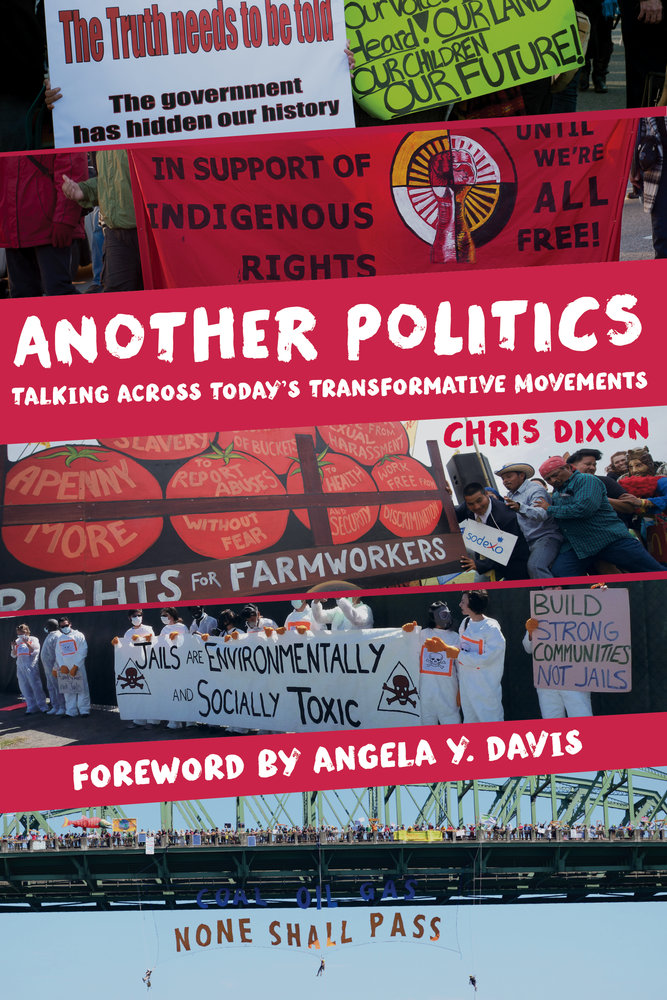
Chris Dixon’s Another Politics: A vital introduction to North American radical politics today

I’m reposting my review of Chris Dixon‘s excellent Another Politics: Talking Across Today’s Transformative Movements. If you want to understand my politics, and the activist experiences it grew out of, reading this book would be a good place to start. The review originally appears here in WIN Magazine. WIN just published its final issue, which includes an amazing look back at debates within organized nonviolence in the USA over the past 90 years. Another Politics is available directly from the publisher.

Book Review

Another Politics 9780520279025Over the past two decades, a certain kind of radical politics has surfaced and resurfaced, most recently within the whirlwind of activism that made up the Occupy movement. As the movement spread and encampments grew, occupiers sought to deepen their critiques and build democracy amongst themselves. Participants looked beyond a single demand to a systemic challenge, through which “all our grievances are connected” — confronting a multiplicity of forms of power, while insisting that the very process of confrontation must be rethought as well. Chris Dixon has assembled a number of self-conscious practitioners of this critical, bottom-up, and egalitarian politics, which he calls the anti-authoritarian current, in a remarkable and many-voiced synthesis of their praxis.Read More »

Evo Morales reopens proposal for highway through TIPNIS

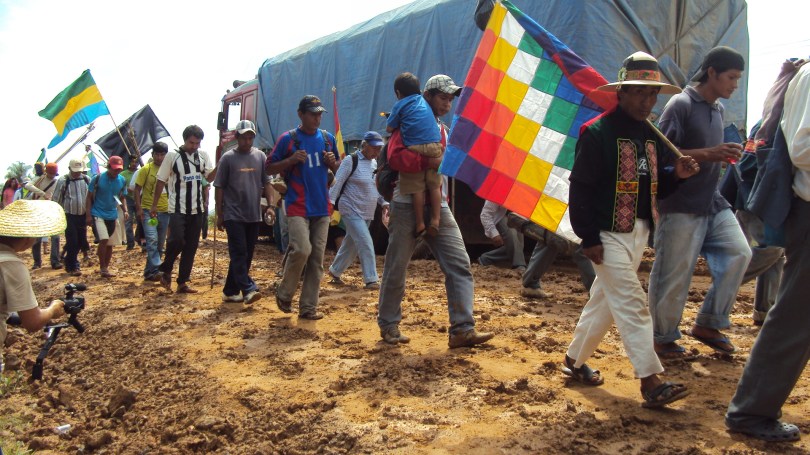
Bolivian President Evo Morales has renewed his efforts to build a controversial highway through the heart of the Isiboro Sécure National Park and Indigenous Territory (TIPNIS), a forested park that is home to over 12,000 indigenous people. The central segment of the highway would bisect the territory and accelerate already high rates of deforestation. Protests spearheaded by the Confederation of Indigenous Peoples of Bolivia (CIDOB) in 2011 and 2012 postponed its construction, while funding by the Brazilian Development Bank (BNDES) was withdrawn. The Bolivian government had previously said it would tackle extreme poverty in the territory before mounting any new effort to build the highway.

On June 4, however, President Morales told an audience in his home base of Villa Tunari, Cochabamba, that the project “will be realized.” His remarks followed on earlier statements leading up to the April regional elections and a May runoff that put the highway back on the official agenda. Now, with an overwhelming victory for Morales’ MAS party in Cochabamba and a very narrow win in the Beni runoff, the national government seems committed to restarting the project. In the president’s words,

On the subject of integration, good voices come from the new governors of Beni [Alex Ferrier] and Cochabamba [Iván Canelas]. The Villa Tunari – San Ignacio de Moxos, comrades, will be realized.Read More »

Kerner Commission report on 1967 riots seems eerily familiar

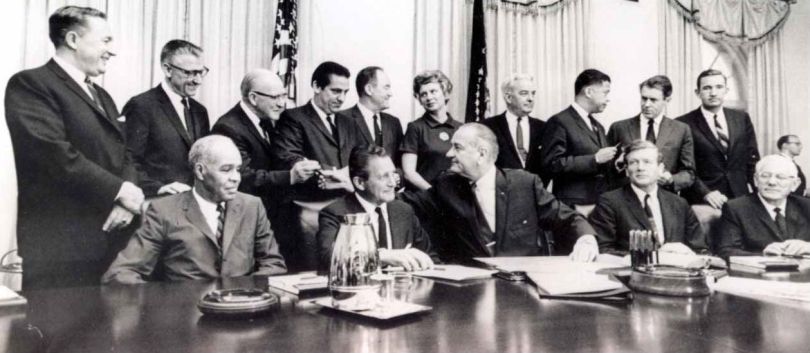
Following the 1967 wave of urban uprisings in Black communities, President Lyndon Johnson established the National Advisory Commission on Civil Disorders to investigate “What happened? Why did it happen? What can be done to prevent it from happening again and again?” As part of the relatively small field of social science on rioting, it is best known for its alarming statement that “Our nation is moving toward two societies, one black, one white—separate and unequal,” a dire prospect for a country that had dismantled the legal doctrine of “separate but equal” just a dozen years before.

Less often quoted is the Commission’s in-depth study of the nature and process of rioting. Altogether, Malcolm McLaughlin records in a recent book (Long, Hot Summer of 1967: Urban Rebellion in America), in the first nine months of 1967, “almost 170 cities in 34 states and the District of Columbia had experienced an uprising of some sort, and almost 40 communities had more than one. Few corners of urban America were left untouched.” In its effort to document and understand the riots, Kerner Commission reached the following conclusions, many of which seem very descriptive of the past year’s flashpoints of unrest from Ferguson, Missouri to Baltimore, Maryland.

The “typical” riot did not take place. The disorders of 1967 were unusual, irregular, complex and unpredictable social processes. Like most human events, they did not unfold in an orderly sequence. However, an analysis of our survey information leads to some conclusions about the riot process.

In general:

The civil disorders of 1967 involved Negroes acting against local symbols of white American society, authority and property in Negro neighborhoods—rather than against white persons.Read More »
An Anarchist Response to Ebola

Anarchists are part of the global conversation on what’s broken in the world, but when things really fall apart — like with the current Ebola outbreak — is the state the only answer? How might a stateless society respond to a challenge like this one? This article provides an anarchist response to these questions, while highlighting issues that require those of us with anarchist politics to carefully think through our position.

This article, written with Chuck Munson, takes on that question: “An An Anarchist Response to Ebola.” It was written for Agency, a new anarchist PR project. Here are “Part One: What Went Wrong?” and “Part Two: Envisioning an Anarchist Alternative.” A single-page, prettified version is posted here on Medium.

Open Letter to Evo Morales about nuclear energy

Re-posting from Breaking the Nuclear Chain (en) and Julio Lumbreras (es)…

Dear Evo Morales,

First of all we would like to emphasize that those who sign this letter consider themselves to be friends of the Bolivian people. We applaud what your government has done over the years for the welfare of the people of Bolivia, for the recovery of control over your natural resources as well as for social justice and the redistribution of wealth. We also support the strong stance you and your government have taken on the protection of the environment, with the institution of the Day of Mother Earth and the acts against the exploitation of food resources for purposes other than the nourishment of the people. Moreover, we have been fighting for years, in our countries and internationally, against military and civilian nuclear energy.

In this light, as friends, we have been surprised by the announcement of your government’s plans to start the process of building a nuclear plant in Bolivia.

We believe this to be a move in the wrong direction and we wish to explain why in the following few points. We also hope that this debate can be continued with the participation of the entire Bolivian society. We therefore welcome positions different from ours and are always available to participate in an open discussion with further contributions.

1) That for nuclear energy is a choice without return, and no visible end! No one knows precisely what it costs to dismantle a nuclear power plant, but it is likely to be comparable to the cost of constructing one; no durable solution for the disposal of radioactive wastes has yet been found. These wastes constitute a heavy legacy that is expensive to store and remains deadly for thousands of years.

Read More »

In Memoriam and Against Secret Wars: Fred Branfman (1942–2014) and Gary Webb (1955–2004)

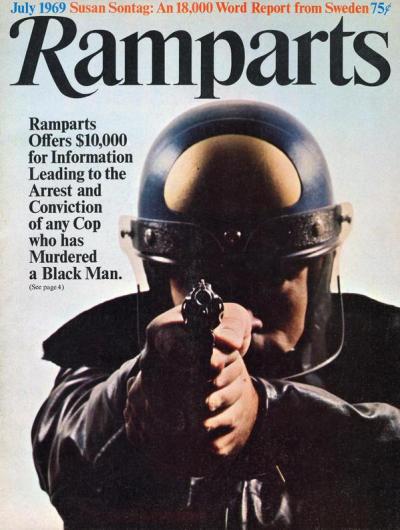
Because the US government lies and journalists often accord those lies respect, because this country has more official secrets than it can keep track of, we live in a country where the term “secret war” is neither an impossibility nor an oxymoron.

Gary Webb showing his article on the drug fall out of supplying the Nicaraguan Contras.

In 1996, Gary Webb, a journalist with the San José Mercury News, broke a story of the interconnections between one secret American war, the funding and arming of the right-wing Contra rebels in Nicaragua, and the spiraling traffic in crack cocaine to the United States in the 1980s. Webb’s exposé broke new ground for newspaper-online collaboration and cast the contradictory politics of the US-backed drug wars at home and abroad into sharp, public relief.

Webb had found flesh and blood individuals to be the face of an already-uncovered pattern of facts. A 1989 Senate investigation had found:

On the basis of this evidence, it is clear that individuals who provided support for the Contras were involved in drug trafficking, the supply network of the Contras was used by drug trafficking organizations, and elements of the Contras themselves knowingly received financial and material assistance from drug traffickers. In each case, one or another agency of the U.S. government had information regarding the involvement either while it was occurring, or immediately thereafter.

With the issue of Contra backers running drugs into the US out in the open, major US newspapers including the Los Angeles Times, New York Times, and Washington Post turned their investigative energies on… discrediting Gary Webb’s reporting. The CIA looked on, relieved. Exiled to a suburban desk at the San Jose Mercury News, Webb was unable to find a full-time investigative reporting position, and took his own life in 2004. (A motion picture adaptation of his life, Kill the Messenger, opens Friday.)

Fred Branfman
Fred Branfman

Fred Branfman, exposed the secret, massive bombing of Laos by interviewing refugees as a educational adviser in the country in the 1960s. Beginning in December 1964, US bombers ran over a half-million flights to drop bombs on Laos, but the war remained “secret,” that is out of the American press, until 1969. (The New York Times maintained its silence until December 1968, then failed to discuss any bombing of northern Laos while reporting the false US government line that bombing in the country was solely to attack supply routes to South Vietnam.)

Coverage elsewhere in the West came first. French journalist Jacques Decornoy offered a lengthy on-site report in Le Monde in July 1968. (Decornoy later authored .) Two years later, thanks to Branfman and the anti-war movement, his writing appeared in American wire services, like this one published in the Harvard Crimson:

On a “usual” morning . . . at 7 o’clock and AD-6 plane prowls overhead. It circles for about ten minutes, then leaves. At 7:30 the plane returns, makes a pass and drops three loads several kilometers from the “hotel.” At 8 o’clock there is a flight of jets. At 8:30, new jets and bombs. The same operation at 9 o’clock.

One of the officials of the Sam Neua district told us that during the first three years of bombing alone, sixty-five villages were destroyed. This is a figure impossible to verify for a short report, but it is a fact that between Sam Neua and a place about thirty kilometers away, not a single house in the villages and hamlets had been spared. Bridges have been destroyed, and fields riddled with bomb craters.

At the other end of Sam Neua the sight is even more painful. Enormous craters are everywhere. Churches and many houses are demolished. In order to be sure of hitting anyone who might be living there, the Americans dropped their all-too-familiar fragmentation bombs. Here by the side of the road lies a disembowelled “mother bomb.” All around for tens of meters, the earth is covered with unexploded “daughter bombs” containing hundreds of steel pellets, little weapons that the Vietnamese know so well. One of them had rolled into a shelter, under a mat, mortally wounding three people who had taken refuge there.

…

SINCE the bombing of Laos began some five years ago, F-4 Phantom and F105 Thunderchief fighter bombers which carry 10,000 to 15,000 pounds of bombs, and B-52s which carry four to six times that bomb load, have made daily runs. This past year they are reported to have flown over 20,000 sorties a month. This is over Sam Neua and the Plain of Jars area alone, which does not include the saturation bombing of the Ho Chi Minh trail in Southern Laos. The result, as U. S. Ambassador to Laos G. McMurtire Godley testified before the Senate Foreign Relations Committee, is that almost one third of Laos’ population of three million has been made into homeless refugees.

Retaliating, the US Embassy pressured Laos to expel Branfman from the country in 1971. Writing in the New York Times soon after, he reported on thousands of interviews, “Each, without exception, said that his village had been totally leveled by bombing. Each, without exception, said that he had spent months or even years on end hiding in holes or trenches dug into foothills.” Branfman died of natural causes this week, at age 72.

Of course, no war is secret to its victims. And few targets of a war can fail to imagine who is behind them.

But in a country like ours, we need people to work diligently to end the secrecy that surrounds wars. To even make the possibility of democratic decision, public reparations, and even honest history, thinkable.

Some facts to dispel your #QuinoaGuilt

This juicy news summary from the Guardian may be the least accurate thing you will ever read about quinoa in Bolivia: “Bolivian and Peruvian farmers sell entire crop to meet rising western demand, sparking fears of malnutrition.” Here’s why:

  • Quinoa farmers (a tiny regionally concentrated minority of Bolivian farmers) have traditionally and continue to set aside a percentage of their quinoa crops for personal use. If they are consuming any less, it’s because they can now afford to buy more fruit and meat than ever before. Source: Los Tiempos, June 2012.
  • Despite the #QuinoaGuilt narrative that “Fewer Bolivians can afford it,” domestic consumption of quinoa in Bolivia tripled in the four years to 2012  Source: La Razón.  Consumption in 2013 was even higher, up by 66%, to 20,000 metric tons due to heavy investment and promotion. Source: La Razón. Bolivian urbanites are eating more quinoa because of diminished stigma around it being an “Indian food.”
  • The government is actively promoting quinoa consumption among the poor, by including it in pre-natal nutrition and school lunch programs.
  • Prices in the domestic market are a public policy issue, prompting government investment to increase supply, as well as the free distribution programs mentioned above. While prices continued to rise in 2013, they hope the much larger cultivation area will lower prices this year.
  • Extreme poverty has plummeted from 38% to 22% of the Bolivian population. Heavy malnutrition once affected 32.7%, but not it affects 24%. Source: La Prensa and the FAO. These gains are driven by faster growth and stronger redistribution of wealth.
  • Compared with other major export crops, quinoa production is carried out by smaller, more sustainable farmers whose lives are more improved by the increased income. These small farmers’ associations capture more of the sale price than do farmers in more mechanized sectors like soybeans and oils.

See also: Further information from the Andean Information Network.