It’s May 2025, and it feels like every new conversation (in my circles? in the United States? far beyond that?) needs to start with an acknowledgement of the bleak bigger picture on the national and global stage. Like every How are you? could be personal, but could also be a How are you coping with these unfathomable times?
In my circles, a short phrase circulated in 2020–22: “Pandemic fine.” It was a way of addressing this uncertainty, this complication, this brokenness in brief, humane terms. With an unspoken subtext something like this: “My loved ones and I had a reasonably good day, though before bed I will be checking the charts that reveal that 2,592 of my countrymen have died yesterday of a disease that didn’t exist three years ago. And that reasonably good day was made as we navigate all the ways we know to live differently to make that number a bit smaller than it otherwise would be.”
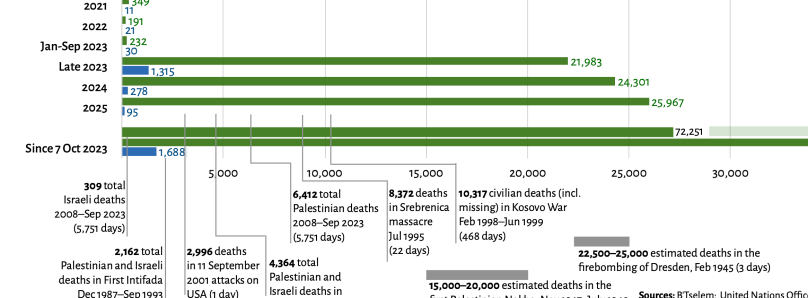
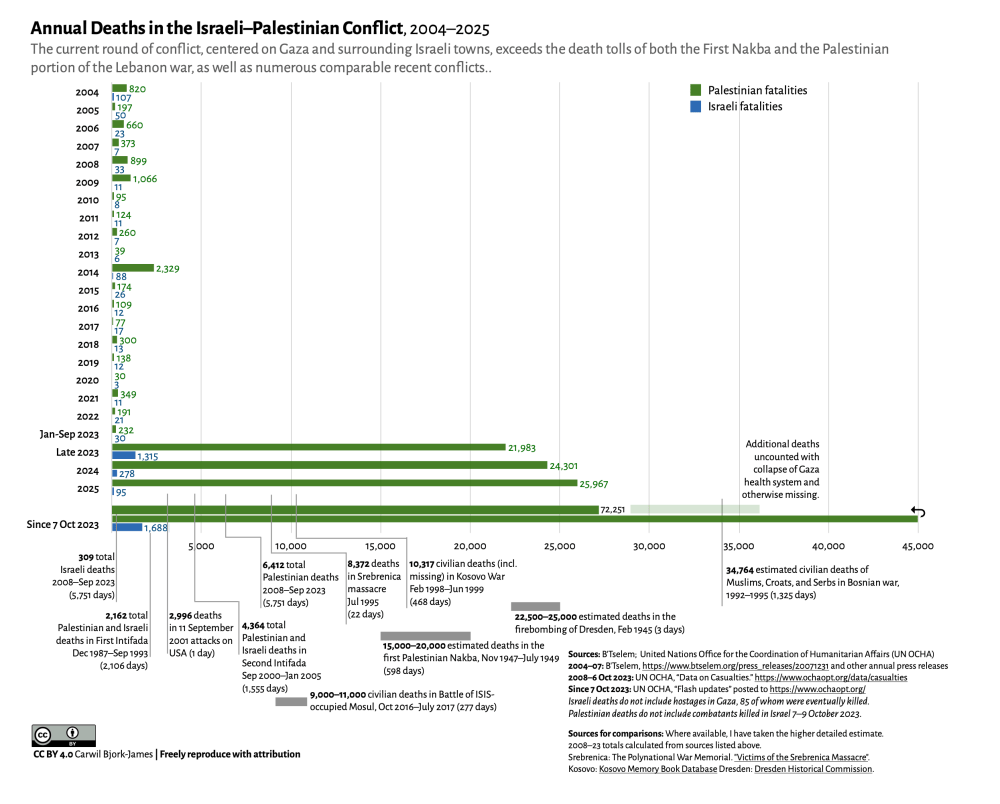
Also in my circles, this attentiveness and yet also disconnect around the COVID pandemic was eventually displaced by the mounting horror of the Israeli genocide in Gaza. Which is something we didn’t have to plan our everyday behavior around. But which was present in our consciousness in a new and visceral way. The first live-streamed genocide brought us inches away from a tide of human suffering and calculated cruelty that was unimaginable. And while it felt like awareness of this new horror was uneven in the United States, the half or more of us who were aware could not look away. Our day-to-day lives coincided with both this atrocity, and with the broken promise of post–World War II life: “Never again.”
Less publicly, and I imagine among a smaller set of Americans than these last two, a dawning realization of the reality of massively disruptive climate change came up again and again in 2024. The city-shaking and sometimes city-shattering disasters that accompany the global rise in temperature knocked on more places I know in 2024, most memorably Asheville and Los Angeles. Those of us for whom climate is an area of expertise know the worst is still yet to come, and in the absence of rapid emissions reductions, the tempo and scale of these disasters will only rise. Among ourselves, we talk about the opposing demands for hope and clarity. and we mourn those places and lifeforms that can no longer be saved.
And for the United States, a further damaging shift came in with the Trump administration, and its dramatic efforts to take off the limits on repressive power; stigmatize and reverse efforts towards racial and gender inclusion; and dismantle a swath of institutions. We’ve see a former president who dreamed of being a dictator hire a phalanx of officials who are actually working to make him one. Moves from an authoritarian playbook are underway in the American state, even as crown jewels of that state — the Centers for Disease Control, PEPFAR, the National Endowment for the Arts , the list goes on — are cast aside. The White House directs a crackdown on the most vulnerable while also starting fights with pillars of its own power: the Ivy League, elite law firms, the Federal Bureau of Investigation.
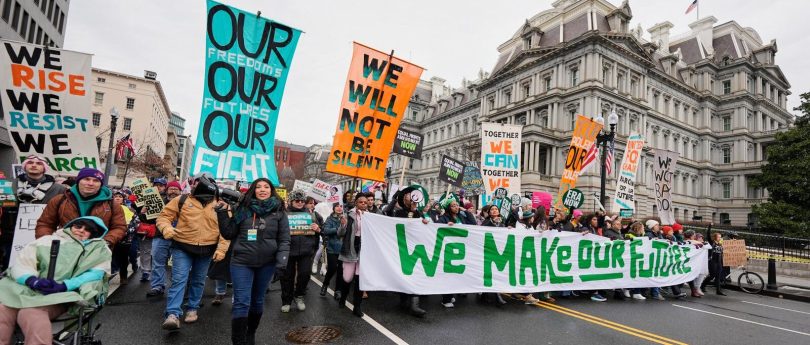
Here there has been no silence. The details are too incredible, the variance with routine channels of action too extreme, the impacts too widespread for us to not bring these things up, just when we check in with each other. Public protests have popped up at a much faster pace this year than in 2017, with sustained regular demonstrating turning into a feature of the political landscape.
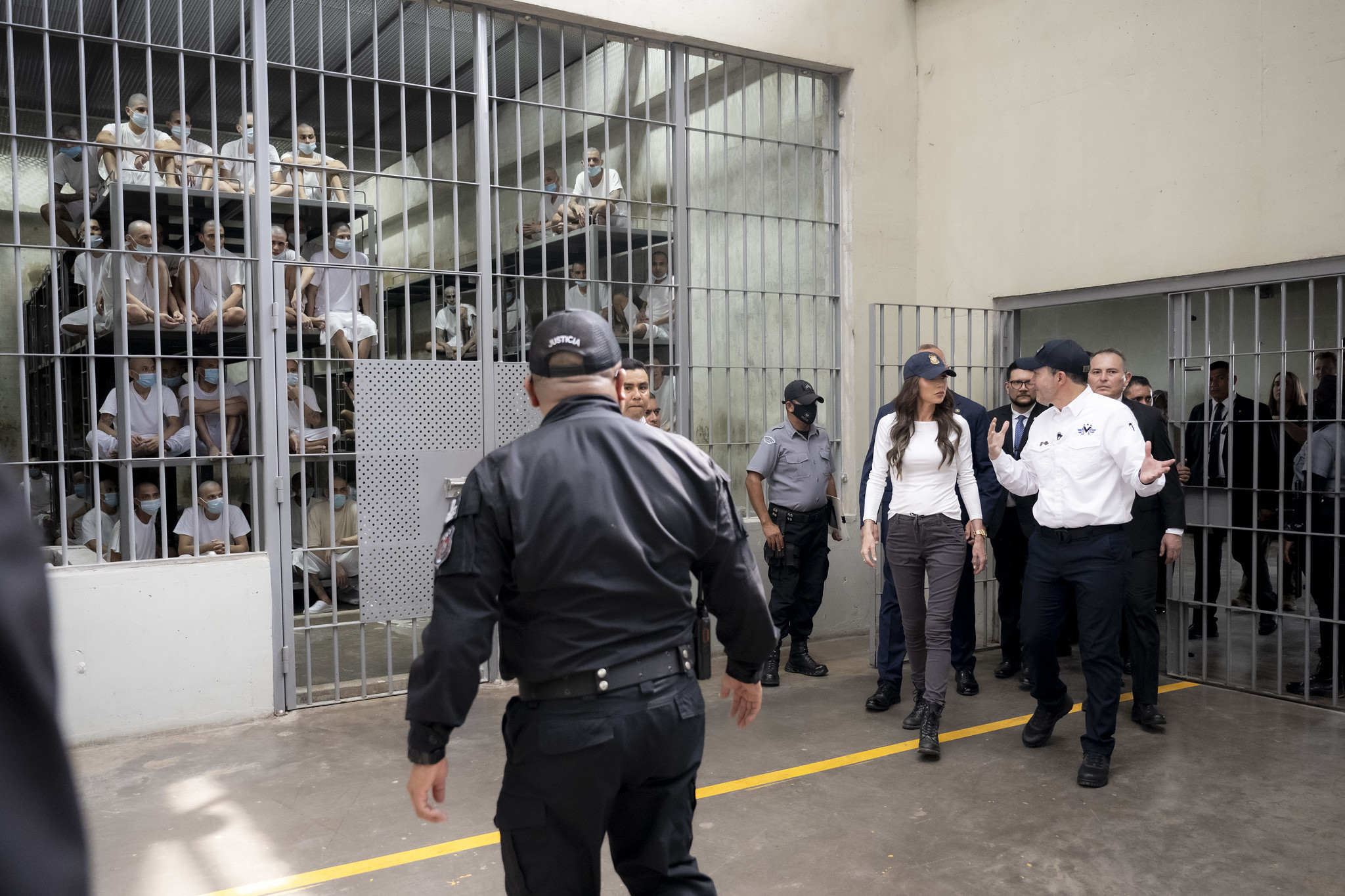
But also, the warning signs of a more repressive turn are real and obvious: snatch squads targeting outspoken student activists; the use of immigration enforcement as political police; unaccountable detentions of lawfully arriving visitors; and the out-of-country imprisonments in El Salvador’s no-way-out prison CECOT. Again, those of us who have made our lives work studying such systems of power, as well as those who grew up living through authoritarian turns, are unified in seeing the dangers here.
Okay, so now what?
We’re up against a wildly ambitious White House intent on turning the US government into an authoritarian state, but also a White House that is doing so with self-weakening abandon. Starting from a bare plurality of voters, and the smallest possible majority in Congress, it is pursuing a maximalist agenda by largely ignoring the legislative process altogether. Its attacks on diversity, on queer rights, on opposition figures personally push otherwise moderate people into opposition. Its crudeness inspires more revulsion than it does participation. Trump’s absolutely Nixonian inability to treat powerful opponents differently than he does powerless ones continues to generate shock and outrage.
After a winter of cowardice, capitulation, and collaboration — with CBS, Columbia University, and the tech oligarchy as its most visible symbols — there’s a new balance of initiative. There will be battles in the courts, defiance from campuses, insubordination in federal offices and occasional bravery in state houses, and many, many reasons to get out in the streets.
Much of US activist practice is centered on raising awareness and visibility. But nothing could be more visible than the situation we confront. (We can retire the bumper stickers that say, “If you’re not outraged, you’re not paying attention.” Everyone is paying attention.) We’ll have to learn the forms of praxis that transform numbers into disruption, and disruption into power.
But I like our emerging coalition. And I like our chances.
Lead Photo: People’s March, Saturday, Jan. 18, 2025, in Washington.(Mike Stewart | AP Photo/Mike Stewart)
Inset Photo: Department of Homeland Security Secretary Kristi Noem receives a tour of the Terrorist Confinement Center CECOT with the Minister of Justice and Public Security Gustavo Villatoro in Tecoluca, El Salvador, March 26, 2025. (DHS photo by Tia Dufour)