Love for Tristan, Solidarity for Ni’lin Against the Wall

This past Friday afternoon, my friend and comrade Tristan Anderson was shot in the forehead by Israeli occupation forces at a demonstration against the wall they are building across the West Bank. The International Solidarity Movement reports,

Another resident from Ni’lin was shot in the leg with live ammunition. Four Ni’lin residents have been killed during demonstrations against the confiscation of their land.

Ahmed Mousa (10) was shot in the forehead with live ammunition on 29th July 2008.  The following day, Yousef Amira (17) was shot twice with rubber-coated steel bullets, leaving him brain dead.  He died a week later on 4 August 2008. Arafat Rateb Khawaje (22), was the third Ni’lin resident to be killed by Israeli forces.  He was shot in the back with live ammunition on 28 December 2008.  That same day, Mohammed Khawaje (20), was shot in the head with live ammunition, leaving him brain dead.  He died three days in a Ramallah hospital.

Residents in the village of Ni’lin have been demonstrating against the construction of the Apartheid Wall, deemed illegal by the International Court of Justice in 2004. Ni’lin will lose approximately 2500 dunums of agricultural land when the construction of the Wall is completed. Ni’lin was 57,000 dunums in 1948, reduced to 33,000 dunums in 1967, currently is 10,000 dunums and will be 7,500 dunums after the construction of the Wall.

The campaign against the construction of an apartheid wall across the West Bank is a crucial part of changing the dynamics of occupation in Palestine. The wall is the greatest manifestation of the policies of confiscating land, turning the occupation into annexation, and maintaining a logic of social separation between Jews and non-Jews in the occupied West Bank. It is also the key place where international law, solidarity from around the world, Palestinian civil society cooperation, and nonviolent direct action are being experimented with as tools for liberation. It does not surprise me, but does make me proud that Tristan placed himself in this crucial location.

Gabrielle Silverman, an activist, eyewitness and Tristan’s girlfriend, described the scene:

We were at a demonstration against the wall, against the Israeli apartheid wall in the West Bank village of Ni’lin, which is about twenty-six kilometers west of Ramallah. I was very close to him when he was shot. I was only a few feet away. The demonstration had been going for several hours. It was wrapping up; it was almost over. Most people had already gone home.

We were standing on some grass nearby a village mosque, and Tristan was taking pictures. He likes to take pictures and post them on Indymedia, sometimes under assumed names. And he was taking pictures, and he was shot in the head with the extended range tear gas canister. He fell to—nothing was happening immediately around us, by the way, I should mention. No one was throwing rocks around us. Nothing was happening. We were standing there.

He fell to the ground, and immediately medics from the Palestinian Red Crescent responded, came running over. And more people came running over. It was very clear that he was—that there was a seriously injured person on the ground. The medics are impossible to mistake. They wear neon uniforms. They have bright yellow stretchers. The medics were working on him, were getting him onto the stretcher, and as we’re doing so, the army continues to tear gas all around us. As we’re carrying him off on the stretcher, there’s tear gas falling, tear gas canister after tear gas canister falling at our feet.

Finally, we get him to the ambulance. The ambulance is very good. The Palestinian medics were excellent. And we get into the ambulance. We drive in the ambulance to the checkpoint at the beginning of town, and we are stopped there at the checkpoint for about fifteen minutes. For about fifteen minutes, the army, the Israeli army, refuses to let us through, even though we have a critically injured person in the ambulance. And the reason why is because under no circumstances are Palestinian ambulances ever allowed to enter Israel from the West Bank. And so, with Tristan being critically injured and getting worse and worse and worse and worse and falling deeper into this abyss, the soldiers are holding us up and waiting—we had to wait there for an Israeli ambulance to come from who knows where and then transfer him into that ambulance. All of this is taking precious time.

Finally, we drive to the hospital in Tel Aviv. I should add also, once the Israeli ambulance did finally show up, there was a soldier who stood in the doorway smirking and wouldn’t move and wouldn’t let the ambulance through until finally another international activist grabbed this soldier and we slammed the door shut, and then the ambulance was first able to start moving towards the hospital. When he got to the hospital, they started doing surgeries on him. (Democracy Now!, March 16)

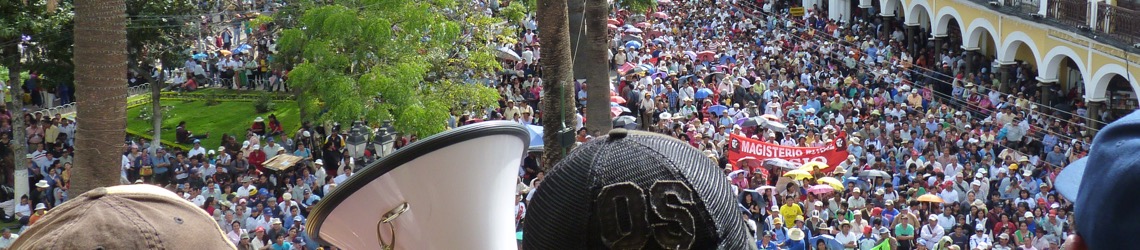
Solidarity demonstrations have been held in London and San Francisco. A demonstration will be held in New York on Friday. It will be at the Israeli consulate, 800 2nd Ave, 4:00pm – 6:00pm. More than 4,000 people have joined “Solidarity with Tristan Anderson” on Facebook.

Tristan has been transferred to intensive care and his condition remains serious.

Tristan is unconscious, anesthetized and artificially respirated, has
sustained life-threatening injuries to his brain (as well as to his
right eye), and is expected to undergo several operations in the
coming days.

Gaza update

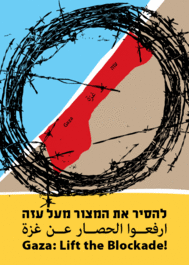
Gaza-End the BlockadeLife for one-and-a-half million people in Gaza has been getting dramatically worse in the past two years. The territory has been surrounded by walls, barbed wire, and an electrified fence. Its older residents can look across these lines towards the lands and ruined villages from which they were expelled in 1948 and 1967. Across the border, an armed conflict is asymmetrically raging. Armed Palestinian factions launch small-scale rockets at Israeli coastal cities in hopes of emulating the pressure that led to the 2002 Israeli withdrawal from occupied southern Lebanon. Meanwhile a far greater Israeli arsenal targets Gaza’s cities, and periodically pushes in with tanks, armored vehicles and soldiers who raid Palestinian homes. The most recent Israeli push—in response to the death of an Israeli student at Sapir College from rocket fire—is still in progress, although a 2-day “interval” was observed while US Secretary of State Condoleezza Rice visited the region. The impact confirmed by B’Tselem so far is:

From 27 February to the afternoon of 3 March, 106 Palestinians were killed in the Gaza Strip. Contrary to the Chief of Staff’s contention that ninety percent were armed, at least fifty-four of the dead (twenty-five of them minors) did not take part in the hostilities. In addition, at least forty-six minors were wounded.

I’m confident you haven’t heard the names of any of these children, nor the circumstance of their deaths. Here’s B’Tselem again:

The killing of four children – ‘Ali Dardona, age 8, Muhammad Hamudah, 9, Dardona Dardona, 12, and ‘Omer Dardona – and wounding of two others while they played soccer in the street, east of the Jabalya refugee camp on 28 February. B’Tselem’s investigation indicates that Qassam rockets may have been fired earlier about 100 meters from where the children were. However, no armed Palestinians were killed or injured in the incident.

The killing of Iyad and Jacqueline Muhammad Abu-Shabak, brother and sister, 16 and 17 years old, when they were watching the fighting from the window of their house east of Jabalya. According to testimonies by family members, the two were shot in the head and chest.

The killing of six-month-old Muhammad al-Bur’i, at the family’s home in the Rimal section of Gaza on 27 February, and the wounding of others, in the shelling of the nearby Interior Ministry building. The building is a civilian office building, and not a legitimate military target.

Current operations, of course, come with the full support of the U.S. government, and presidential hopefuls McCain, Clinton and Obama.

Unfortunately, missiles and invading soldiers may not be nearly as destructive as the policies of “economic warfare” (in the words of the Israeli government), which now extend to restricting, and at times cutting off, electricity and fuel supplies to the Gaza Strip. The result is a new humanitarian crisis. A joint report, The Gaza Strip: A humanitarian implosion, on the current depth of the crisis has been released by eight UK human rights and aid groups, including Oxfam and Amnesty International. According to Geoffrey Dennis, Chief Executive of CARE International UK:

Unemployment has soared and 80% of people in Gaza are now dependent on food aid compared to 63% in 2006. Water and sewage infrastructure is on the point of total collapse. Unless the blockade ends now, it will be impossible to pull Gaza back from the brink of this disaster and any hopes for peace in the region will be dashed.

Key facts in the report:

  • 80% of families in Gaza currently rely on food aid
  • 95% of Gaza’s industrial operations are suspended due to the ban on imported raw materials and the block on exports
  • 18.5% of patients seeking emergency treatment in hospitals outside Gaza in 2007 were refused permits to leave
  • Hospitals are currently experiencing power cuts lasting for 8-12 hours a day
  • 40-50 million litres of sewage continues to pour into the sea daily

“Humanitarian crisis” means daily disasters. Here’s one father’s description from the inside.

The U.S. role in the Fatah-Hamas battles of 2007 is the subject of a new Vanity Fair exposé. David Rose reports in “The Gaza Bombshell,” that the U.S. armed Fatah to expel the popularly elected Hamas government from Gaza.

In essence, the program was simple. According to State Department officials, beginning in the latter part of 2006, Rice initiated several rounds of phone calls and personal meetings with leaders of four Arab nations—Egypt, Jordan, Saudi Arabia, and the United Arab Emirates. She asked them to bolster Fatah by providing military training and by pledging funds to buy its forces lethal weapons. The money was to be paid directly into accounts controlled by President Abbas.

Legal or not, arms shipments soon began to take place. In late December 2006, four Egyptian trucks passed through an Israeli-controlled crossing into Gaza, where their contents were handed over to Fatah. These included 2,000 Egyptian-made automatic rifles, 20,000 ammunition clips, and two million bullets.

This shipment, and arms and training that followed, were joined by the leak of a State Department-drafted “Action Plan for the Palestinian Presidency”:

The early drafts stressed the need for bolstering Fatah’s forces in order to “deter” Hamas. The “desired outcome” was to give Abbas “the capability to take the required strategic political decisions … such as dismissing the cabinet, establishing an emergency cabinet.”

Hamas read this as a call for a coup. So did Dick Cheney’s chief Middle East adviser, a neo-conservative by the name of David Wurmser:

Wurmser accuses the Bush administration of “engaging in a dirty war in an effort to provide a corrupt dictatorship [led by Abbas] with victory.” He believes that Hamas had no intention of taking Gaza until Fatah forced its hand. “It looks to me that what happened wasn’t so much a coup by Hamas but an attempted coup by Fatah that was pre-empted before it could happen,” Wurmser says.

Hamas seized complete control of the Gaza Strip in June 2007. Outsiders like myself were left to see it as mere internecine warfare. Now we have questions to ask about how our government armed one political party to oust the other, while backing the siege that keeps Gaza’s Palestinians on the edge of survival.