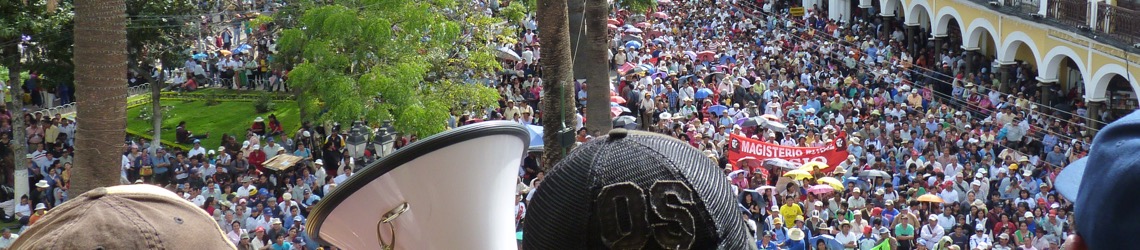
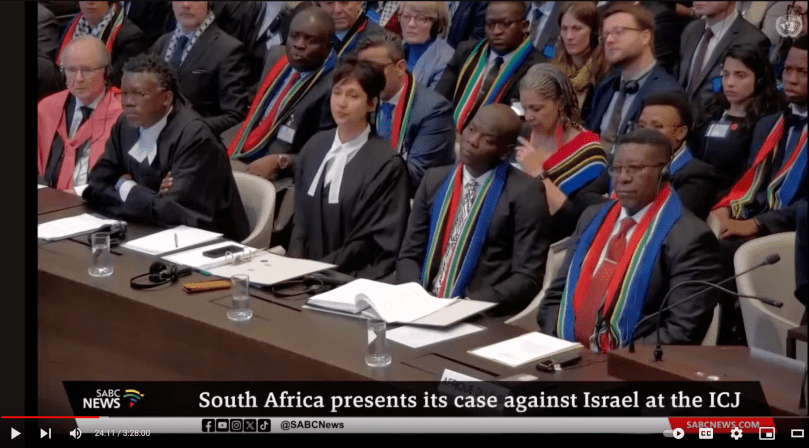
South Africa’s existence as the country it is now is the result of a remarkable global collective struggle that many US residents played a part in. This struggle was only in small measure a legal one, but it built on the ways democracy, anti-racism, and equality of all nations were built into the global legal architecture since 1945. Apartheid was overcome in part by UN institutions deeming apartheid itself a crime.
Perhaps some day, decades from now, Palestinians and Israelis will sit side-by-side and advocate for the rights of others (whether as representatives of two states or one), and will remember their own troubled history and how they overcame it by ending violence and ensuring equal rights for all. If so, it too will be in part because voices worldwide could not abide the violent present, and used every means they could, including courts and diplomacy, boycotts and arms embargoes to chart another path..
 Carwil without Borders