Delayed blogging: Settling in

[June 12] It snowed yesterday in El Alto. Not what I expected when I took the microbus (read: minivan with signs) up to the University there. Verdict: winter is real.

The event that the snow and bad directions made me miss was held again down here in La Paz around dinner time… A professor and a Vice-Minister of Justice talking about redefining policies of criminalization in a plurinational society. The first talk was very provocative–lots about how criminal law (and incarceration) are a last resort for resolving conflict, and we need to think first about the mechanisms creating for mediating conflict. Also, a question I’ve never heard asked before in such a forum: how do we solve the problem of those in prison always, under any type of government, consisting almost entirely of the poor.

There’s a lot of through-the-looking-glass style experiences of ideas you’d never expect to come out of an official’s mouth.

And then there’s the altitude (which has slowed me down, but hasn’t thrown me for a loop yet), the sudden lack of daylight hours, and being in a very different city. But I’m well, and housed for the next week or so here in La Paz (two floors above the crazily beautiful but excessively spacious place I looked at a couple days ago).

Blogging from Bolivia…

I’ll be in Bolivia for at least the next four weeks, and Ecuador after that. I’m flying to the Andes to get an up-close look at the very remarkable social changes that have been going down here since 2000. I’m feeling very curious and optimistic, and here’s a bit of why…

In January 2000, with many of us freshly back from the WTO protests in Seattle, we were still thinking in terms of cracks in a monolith of corporate-backed power. A “Washington Consensus” imposed policies on Latin America that would be unthinkable in the U.S.–rolling back guaranteed social services, accelerating the growing extraction of oil, gas and timber, privatizing resources like water, and assigning the costs largely to the poor. It was called structural adjustment, because it was negotiated to make the debts owed by the countries of the South payable, but with everyone selling off their country at lower and lower bids, it never even balanced the books.

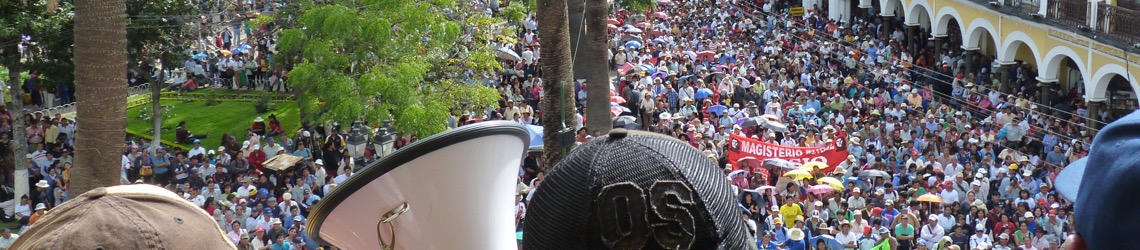
Ecuador’s January 2000 national uprising was the first of many to topple a neoliberal government, even if only for a few days. It wouldn’t be the last time mass unarmed movements succeeded in doing so. A few months later, tens of thousands in Cochabamba, Bolivia occupied the center of their own town in the culmination of a months-long conflict with Aguas de Tunari (owned by San Francisco’s Bechtel), who had assumed private control over the cities water supplies and proceeded to double (or more) the bill. The privatization was reversed and the city’s water system is now a massive experiment in a community controlled utility.

Life in both countries has simply gotten a lot more interesting each year since. Stay tuned for the latest.