Local road blockade challenges Egyptian election fraud

On Sunday, Egypt held parliamentary elections which are widely known to be neither free nor fair (denunciation by the Carnegie Endowment for international peace). The elections were a demonstration of the government’s plans in advance of the 2011 elections, when long-time president Hosni Mubarak may make way for his son to rise as a successor. Unlike the media frenzy over the selection of Kim Jong-Il’s son to receive a special title, little mainstream outrage has been directed at Mubarak’s machinations. Egypt remains under its third decade of emergency rule (which ban demonstrations and some opposition parties), and is the largest non-democratic recipient of United States’ foreign aid by far. It’s also the largest undemocratic country in the Middle East, helped to remain so by our tax dollars, and military and diplomatic support. It’s the clearest sign that the alleged US policy to support democracy in the region is a joke.

In the absence of outside support, people in Egypt have made a number of challenges to this situation. One of the latest was the mid-day peaceful uprising on Sunday by residents of Balteem and Hamoul against voter fraud. Their actions were in defense of independent candidate Hamdeen Sabahy (profile). Since 1995, three of Sabahy’s voters have been killed by Egyptian riot police, while he won office in 2000 and 2005.

Blogger Baheyya has an hour-by-hour account of local resistance (h/t to The Arabist). Here are some highlights:

8:30 am. Sabahy’s representatives rush to photocopy the new certification papers required to gain access to polling stations. Early that morning at 12:30 am, Sabahy’s campaign was dumbfounded to learn of sudden new regulations for the papers, requiring that they be stamped from police precincts rather than notary publics as had been announced earlier. Certain that this is an 11th hour rule manipulation to bar Sabahy’s agents from accessing polling stations, campaign workers spend all night driving to police stations to get the necessary stamps.

9:10 am. The first reports of foul play trickle in. Candidate agents from 12 polling stations phone in that they have been kicked out of polling stations, and one says her certification papers were ripped up despite having the necessary police stamp.

1:00 pm. Sabahy’s representatives sent to Hamoul and agents of other candidates who are sympathetic to Sabahy begin to phone in reports of ballot-stuffing in favor of Abdel Ghaffar in villages surrounding Hamoul.

1:50 pm. Balteem’s main streets are lined with men congregating and sitting on the sidewalks, expressions somber and nerves frayed. A procession of cars and pickup trucks loaded with youth speed past in the direction of the highway. “They’re blockading the highway!” Spontaneously, Balteem and Borg youth decide to blockade the highway to protest what is now a certain sense of election rigging. The news travels like wildfire and some cars change route and head for the highway rather than Sabahy’s house. Frantic calls to campaign cars instructs them to make sure no women are headed to the highway, in anticipation of violence between protestors and riot police.

2-4 pm. Town youth blockade the highway with burning tires and clumps of tree branches and wooden sticks. Highway traffic comes to a standstill, with freight trucks backed up as far as the eye can see. A campaign worker says to no one in particular, “Didn’t I say that this morning was the quiet before the storm?”

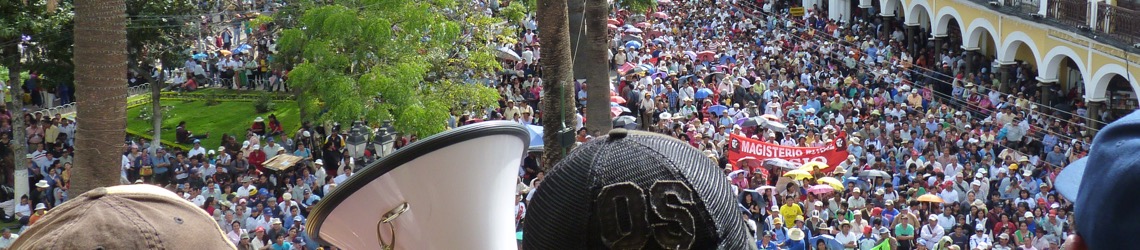
4 pm. Townspeople converge on Sabahy’s courtyard and the candidate comes out to speak, standing on a pick-up truck. Livid, fiery youth and men climb on the pick-up truck and demand revenge. Sabahy struggles to control the crowd’s emotions, saying he’d rather withdraw and give up his seat than join this scandalously handpicked parliament. A fully veiled woman in black climbs on the truck and pulls the microphone from his hand, screaming, “Don’t you dare withdraw, Sabahy! Don’t you dare withdraw!”

The crowd chants, “Balteem boxes won’t leave! Balteem boxes won’t leave!” By law, counting stations for the entire district are located in Hamoul but since Hamoul was experiencing rigging, residents feared their ballots would be destroyed or disappeared en route to the counting station.

Ultimately, these efforts appear not to have saved the day. Instead it was the threat of further government violence that won. Al Ahram reported at 4:35 pm, “Police armored vehicles have stormed Balteem, in Kafr El-Sheikh, firing tear gas and live ammunition into the air.” Later, Sabahy himself convinced his supporters to stand down (again, the full day is here):

7:00 pm. Sabahy comes out and is immediately mobbed by the crowd, lifting him on their shoulders and giving him a hero’s welcome. He gives a rousing speech in which he denounces the government and several Amn al-Dawla officers by name for fixing the elections in Hamoul, and reiterates his position of withdrawing from the elections. The crowd presses him to authorize and lead a peaceful protest march to the police station to protest the rigging, but Sabahy fears security forces’ violent response and does not want injuries and casualties among his supporters, as in the past. The back-and-forth goes on for an hour that feels like an eternity, but in the end Sabahy prevails and the people are dejected, though none take matters into their own hands as some did that afternoon.

Somewhat obnoxiously, a government spokesman claimed, “The [governing] party’s careful selection of its candidates was a factor in defeating big opposition names such as Hamdeen Sabahi.” Sabahy withdrew from the race, and made these comments later: “The rigging proves that the [governing] NDP wants no opposition in parliament. With the new parliament, we will see increased restrictions on freedom of expression, including new restrictions on the media.” Whatever the wisdom of backing down (and no one should be too eager to second guess such moves when lives are at stake), residents’ willingness to take their anger to the streets are remarkable under so much pressure.

p.s. Apparently, Egyptian President Hosni Mubarak would like another dictatorship in Iraq, according to advice he gave to US officials (Thanks, Wikileaks).

The US-Bolivia Relationship

Last week, Bolivia hosted a conference of defense ministers from all the countries in the Americas. This became front-page news here mainly because of the speech by President Evo Morales and proposals put forward by Bolivia. It also seems to have attracted at least a little attention in the United States.

US Defense Secretary Robert Gates came to Bolivia with the public agenda of discouraging Bolivia-Iran economic cooperation. He was actually surprisingly diplomatic in his complaints, saying from the outset that Bolivia has the right to have relationships with whomever it chose, but cautioning that Iranian interest in Bolivia’s untapped uranium and joined Bolivia-Iran plans for civilian nuclear plants will be closely monitored.

During the summit, Evo’s opening speech criticized the United States’ history of intervention in Latin American democracies. He claimed that popular democracies are “three and one” in resisting attempted coups backed by the United States. The three are Venezuela (2002), Bolivia (2008), and Ecuador (2010); with the one being Honduras (2009). In fact, they are two inaccuracies in this score: the recent police revolt in Ecuador did not have any apparent American backing, as President Rafael Correa has said publicly; and Evo, like many other observers, leaves out Haiti (2004), the only case in which Americans had an on-the-ground role. The real score is a less optimistic two for the democracies, two for the United States-backed coups against them.

Nevertheless, what has gathered media attention is not Evo’s accuracy, but his audacity in making such a comment in front of a senior American official. The Heritage Foundation responded by saying that, “Morales demonstrated in his speech a quantity of venom, a lack of restraint, and complete disrespect for the U.S. that befits a bully and tyrant.” Heritage joins several right-wing congress members and urging more hostile relations between the United States and Bolivia.

It is difficult to imagine exactly what that would mean since the two countries have had not had ambassador-level relations since 2008, when Bolivia expelled the US ambassador for coordinating Bolivia’s right-wing opposition at a time when it was seizing and burning government buildings and taking over gas infrastructure. After the Obama election, both countries have expressed a desire for renewed relations and cooperation, but the Bolivian proposal for a treaty of mutual respect has languished inside the United States State Department. While in August of this year, the countries announced “90% agreement” on the treaty, there is then no action since. Now that members of the new Republican House majority are making angry noises about Bolivia, it will be even more difficult for the Obama administration to make headway on mending the relationship.

I’ve been meaning to write a bit of background about the US-Bolivian relationship, and the realistic and unrealistic fears of the Morales administration about US intervention. The threat is real; no one who pursues an independent policy as a Latin American president can ignore what happened to Salvador Allende (Chile, ousted by a US-backed coup in 1973); Maurice Bishop (Grenada, invaded by the US in 1983); and Jean-Bertrand Aristide (ousted by CIA-paid Army officials in 1991); and what nearly happened to Hugo Chavez in 2002. However, the rhetoric of foreign interference often gets carried over into domestic politics. A quick summary might be: Just because they are out to get you doesn’t mean you’re not paranoid; and, Just because you’re paranoid doesn’t mean they aren’t out to get you. However, since nearly 1,300 documents on just what the US Embassy has been doing in Bolivia are being released by Wikileaks beginning this week, I’ll suspend judgment on just who is paranoid until I read the documents.

What’s behind the Potosí regional strike?

As the department-wide strike in Potosí continues to edge into the international press (primarily through its effect on tourists and now upon mining companies that operate in the region), I want to give more of the background on the strike and its demands, so it’s at least understandable why people are blockading and hunger striking there.

“It can be summed up in one single thing: in misery. … We are fighting for a hill that as of yet is not a factory, just a hill; it’s raw material. For the dream that some time we, that the families that live there, might have something. They are places forgotten by the hand of God: they don’t have water. They are using up the water in the wells. There is no electricity. It is misery.”
Saúl Juarez, Potosino hunger striker in Cochabamba

If you are from North America, this use of misery might be unfamiliar to you, but it is common in the language of Latin America. We must first organize, then-Haitian president Jean Bertrand Aristide once said, to move from misery to poverty. Here in the hemisphere’s second-poorest country (after Haiti), Potosí is the poorest of nine departments. The rate of extreme poverty, which is falling nationwide, is still 66.7%; meaning that two-thirds of Potosinos cannot afford to buy their family’s basic necessities. Of every 1000 live births there, 101 children will die before their fifth birthday. Both of these figures are the highest in Bolivia; in the case of child mortality, the second place departments—La Paz and Chuquisaca—see 63 deaths per 1000 children. It is for this reason that Potosinos have spread to the rest of the country in search of better opportunities.

“We can say that we are fighting for the reactivation of the productive apparatus of Potosí.”
Claudia López, Potosino hunger striker in Cochabamba

Most of the demands advanced by the Potosí mobilization are focused on specific industrial or economic projects, which in the eyes of protesters, have languished for the lack of state interest. The boundary dispute with Oruro centers around two hills that contain limestone, a key ingredient for cement, and a second demand is for a cement plant to earn money and create jobs from that resource. Likewise, Potosinos are calling for the activation of a metallurgy plant and for the creation of an international airport to connect Uyuni and its phenomenal salt flats to international tourists.

Potosí, of course, is not poor for the simple lack of investment from the outside. It has never simply languished in the absence of foreign interest. Instead, it was once the largest the city in the Western world precisely because of the rich attraction its mineral wealth held for the Spanish state and its investors. Immense wealth was symbolized by the Cerro Rico which sits above the city, or simply by the phrase “it’s worth a Potosí.” Every Bolivian, rich or poor, left or right, knows how Bolivian wealth enriched Spain, and through it Europe. And every Bolivian understands that to take part in that wealth requires doing more than extracting minerals from the ground and shipping them out of the country.

More recently, Potosí was hit hard by the shock-therapy program of neoliberal economic restructuring that began in 1985. At the time, the miners who worked for COMIBOL—the national mining company that took over the mines run by three wealthy tin barons in 1952—were the strongest social movement in the country. The government of Paz Estenssoro aimed to break this power, and essentially shut down the government-run mining sector to do so, laying off tens of thousands of workers. Those miners who did not resettle elsewhere in the country became the backbone of the cooperative mining sector, a collection of small scale mining projects that engage in uncoordinated mining of the Cerro Rico, and other mountains like it, in search of rich veins of minerals. Decades of such drilling have brought the Cerro to the brink of structural collapse, posing the threat that the hill—recognized as a World Heritage Site by UNESCO—could become a ruin.

“They all come to promise and promise, and to say this and that could be done. The [current] government has done the same: it has promised. But after five years of their rule, of creating new laws and a new constitution, of re-electing them, there is nothing. … So, we want dates; we want concrete responses of when and how; we want specific studies; we want operational plans that establish dates for the processes that are going to happen.”
Claudia López

If one had to choose a symbol of the capacity for delay in pursuing development projects in Bolivia, it might well be Karachipampa, the metallurgical plant that the mobilization is demanding to be activated. This lead and silver smelter was built between 1985 and 1988. It has never operated.

Several years ago, in 2005, the Canadian firm Atlas Precious Metals Inc. entered a shared-risk agreement to invest in the plant. You can see on their web page an optimistic assessment of the plant’s production capacity. As of April, only 20% of the firm’s promised investment had been realized (article in Spanish). Currently, Atlas and COMIBOL are in a legal dispute in which Atlas demands its $12 million investment be repaid, and COMIBOL seeks compensation for the value of the plant, which remains unused. In a letter to the government (es), the Potosinista Civic Committee washes its hands of the whole dispute and demands:

The only thing the Potosí people want is to see, in an immediate manner, the effective functioning of the Karachipampa Plant, whether it is with the [foreign] company or through state intervention.

Beyond all these details, the strongest emotion visible here is simple, exhausted, impatience. Whether the timeline is 21 years for the plant, or 5 years for the MAS government, or three generations for the border dispute (more on that when I can provide a fuller background, or transcribe more of my interview with a Coroma resident), those who have thrown themselves into this protest have run out of patience. Against the experience of delay, they have enacted tactics based on urgency: extended blockades, hunger strikes, and so on. So far, Potosinos themselves, beginning with the hunger strikers have borne most of the costs of these urgent tactics themselves, or imposed them on the surrounding communities. However, they are increasingly enacting or talking about tactics that will cost companies operating in the region substantial losses on a daily basis.

Potosí isolated by 12-day regional protest

[There is, as of today, rising hope for negotiations to begin between the Government and Potosinos (and for three-way dialogue with Oruro on the border issue to take place as well) soon. More on that soon. This post comes as written yesterday. Also, I added a little bit on Pablo Solón’s comments on Democracy Now at the end.]

A department-wide general strike in Potosí department, Bolivia’s traditional mining center, has entered its thirteenth day today, with no clear end in sight. The strike is now taking three major forms: a comprehensive blockade of transport in and out of the department, a general closure of businesses by both their workers and owners, and a growing hunger strike reported at more than 500 people on Sunday. The mobilization was backed by a remarkable show of unity on last Tuesday, August 3, when some 100,000 people marched in the city of Potosí in support of the effort. The number is phenomenal relative to the city’s population of 160,000, and even the department’s of some 700,000.

The systematic isolation of the department has made it impossible for me to visit the protests, once it became clear (with the march) just how significant this event is. Hundreds of trucks and buses are lined up at the various entrances to the department. As of Sunday, the Governor of Chuquisaca was mobilizing food and supplies to people stranded on the border.

Potosinos in protest are coordinated by the Civic Committee of Potosí, a coordinating committee of major institutions. Other key actors include the community of Coroma (part of which is in territory also claimed by a neighboring community in the department of Oruro), the Federation of Cooperative Miners, and since the massive march, major politicians including Governor Félix Gonzales (MAS). Gonzales and four Potosino members of the Plurinational Legislative Assembly (formerly, the National Congress) are at the head of the hunger strike.

Compared to the mobilization, the demands are quite modest:

  1. Delimitation of the inter-departmental border between Quillacas (Oruro) and Coromo (Potosí), which centers around control over limestone resources in the area
  2. Installation of a cement plant in the Coroma region, using those resources
  3. Reactivation of the metallurgy plant in Karachipampa, currently suspended due to a legal conflict among two companies
  4. Preservation of the Cerro Rico, the massive mining mountain just outside the city of Potosí, whose structural future is in jeopardy after five centuries of mining
  5. Construction of an international airport for Potosí as soon as possible
  6. Completion of delayed highway projects

The protests seemed to have expanded as rapidly as they did because in the first week the national government insisted, primarily through its Minister of Autonomy Carlos Romero, that they were a purely partisan effort in defense of Potosí Mayor René Joaquino (see ). This added to a sense of indignation at being ignored by a MAS government to which they have supplied an overwhelming vote for the past five years. Their sense of being slighted has rebounded into the chant (heard at a solidarity march of Potosinos here, as well) of “Potosí Federal,” a call for devolving power to the region. (This is clearly not a demand of the mobilization, however, and it’s unclear how such a demand would differ from the departmental autonomy approved by referendum in December, and soon to be delimited by a Statute of Autonomy.) Comcipo leader Celestino Condori emphasized a new sense of unity on the day of the march, “We’d like to demonstrate to the government that in Potosí, there is unity, among Moors and Christians; everyone is changing their polleras [traditional indigenous women’s dress] to put on the red and white which are the colors of the Potosino flag.” In action, this is taking the form of a wide variety of hunger strike pickets led by different organizations, and since the weekend, spreading to other cities in Bolivia.

Currently, the impasse blocking negotiations concerns where and how they might take place. As with movements across the continent (and using good strategic sense), the Potosí movement has demanded to negotiate at their place of strength, while the pressure of mobilization is on. On the other hand, the Morales government is insisting that discussion of border must occur in neutral territory and that no negotiations can take place without an intermediate truce that suspends mechanisms of pressure. On the question of territory, they are backed up by concerns that Oruro might mobilize as well if discussions began on non-neutral ground. Oruro’s civil society placed themselves in a “state of emergency,” preparing to mobilize last weekend.

In a broader sense, this mobilization is one of a growing number of signs that MAS allies (and members, such as the governor) are moving to pressure the national government over particular demands, making Evo Morales’ second administration a period of serious conflict, though of a very different kind than the years of confrontation with the right-wing of the media luna. It also is an early sign that the new autonomy in the western departments will come with genuine political independence on the part of regional leaders.

Incompetent English-language coverage: As a side note, this central political story in the last week here in Bolivia is being described to the English-speaking world by reporters who can only be described as myopically focused on the lives of wealthy foreign tourists and stunningly ignorant of local realities. Local realities such as the front page stories of every single national newspaper. Associated Press, I’m talking about you. Here, in its entirety is Saturday’s AP story on the Potosí situation:

Protest traps tourists in Bolivian highland city

(AP) – 1 day ago

LA PAZ, Bolivia — A protest by Bolivian miners has trapped more than 100 mostly European tourists in the southern Bolivia mining city of Potosi for more than a week.

The protesters piled rocks on the runway of the Potosi airport Friday to prevent a plane from landing to pick up some of the foreign tourists.

The miners have also blocked roads into the area for 10 days.

Also trapped are about 500 Bolivians, and local media say the blockade is beginning to cause food shortages in the city of 200,000 people.

The miners have a series of grievances with the government, including a demand to reactivate mines that officials ordered closed and to settle land disputes. (“Protest traps tourists in Bolivian highland city,” The Associated Press)

I’ve highlighted in red things that are basically wrong, or reflect the listening-to-other media’s-stories as reporting that seems to have gone into this story, filed from La Paz. As noted above, cooperative miners are one of many groups that have folded into the department-wide protest. There are substantial reports of Bolivians being stranded, but descriptions of around five hundred people refer to people on vehicles waiting to get in to the region. “The area” is actually the Department of Potosí, which has one “land dispute” on the table, its border with Oruro. The only mine under discussion in the demands is the Cerro Rico, whose structural instability could result in the closure of mining, under a review currently underway and encouraged by UNESCO, which maintains the mountain (as well as the city) on its World Heritage list. For details of the actual airport incident, which did involve miners, you can see this article in Spanish. For consolation on the ability of English reporters to competently discuss life in Bolivia, see this piece from Agence France Presse: Protesters seize Bolivia airfield, seal off Potosi.

Pablo Solón on Democracy Now: Potosí got a sliver of further US media coverage today with the mention of the protest made by Amy Goodman while interviewing Bolivian Ambassador to the United Nations Pablo Solón. Amy’s question got to the heart of the protest: “The demonstrators are calling for more investment by the Bolivian government in the lithium-rich area.” And Solón basically dodged her question by talking about borders and not development commitment. It’s hard not to be sympathetic with him having to explain this issue alongside the other awesome work he’s doing, which the interview does a good job of describing.

Pando Massacre trial underway: 314 witnesses named by the prosecution

The Prosecutor’s Office has tendered its list of witnesses (article in Spanish) in the trial of twenty-five officials and right-wing activists for the 2008 massacre in and around El Porvenir, Pando. The witness list includes 314 people, reflecting an extensive investigation of the day’s deadly events. The key defendant in the trial is Leopoldo Fernández, then Prefect of Pando, who is accused of coordinating the massacre of at least 19 campesino protesters on September 11, 2008. Fernández was removed from office shortly thereafter and has remained in prison for the past 20 months. During last year’s presidential elections, the right-wing Progress Plan for Bolivia slate nominated him as their Vice Presidential candidate.

Some background: The large massacre of MAS-aligned campesinos occurred on September 11, 2008, the deadliest political violence in Bolivia since 2003. The confrontations of that day are the subject of a recent documentary by César Brie, the playwright and director who produced the documentary about the May 2008 public humiliation of peasant activists in Sucre. Brie’s documentary, Morir en Pando (To Die in Pando), broadly confirms the investigation by UNASUR, South America’s equivalent of the European Union. I saw it in its depressing length during my first week here. As the media luna governors mounted their most serious challenge to national power, local campesinos (and in Santa Cruz, slum dwellers) mobilized against them. Two contingents of campesinos were marching to Pando’s capital by way of Cobija on that fateful day. Right-wing civicos (there is no good translation for this “civic movement”) attempted to block both marches, threatening the use of deadly force. A complex series of confronations, during which Brie argues a civico was brought down by “friendly fire” gave way to an all out assault by civicos on the peasant protesters. At least twenty were killed; and angry right-wing crowds outside the hospital in Pando’s capital Cobija attempted to assault wounded campesinos receiving treatment. Some were evacuated to La Paz for their own safety, and many had their injuries downgraded and misrepresented in their eventual autopsies.

This dire event was in several ways a turning point for the 2008 political crisis. The MAS government, which had been pursuing an apparent strategy of falling back in the face of right-wing violence, cancelling presidential visits for example when right-wing protesters threatened to disrupt them, made its first major show of force. Pando’s Prefect (the new, post-2010, title is Governor) Leopoldo Fernandez was linked to the civic movement and the violence, a state of emergency was declared, and Fernandez was arrested.

Stunning political turnaround: Despite the clear depth of the right-wing movement in Pando, the department broke from the so-called media luna block of four eastern departments in this past April’s regional elections. Both the new governor of Pando, Luis Flores, and the new mayor of its capital Cobija, Ana Lucía Reis, represent the indigenous-popular Movement towards Socialism, Bolivia’s governing party.

Links: BP Oil spill in photos, maps

Smoke billows from controlled burns of spilled oil off the Louisiana coast in the Gulf of Mexico on June 13. (Sean Gartner/Reuters)

The Christian Science Monitor has published a gallery of fifty-five photos of the ongoing BP Deepwater Horizon oil spill’s various effects in the Gulf of Mexico. It’s dramatic and informative even if you’ve been following the spill as closely as I have. Many of the photos, like this one above, also provide a rare sense of the scale of the oil that’s been added to the environment, and the experiment in pollution that is being conducted right now.

Other spill resources:

  • New York Times’ Oil Spill Tracker interactive map—Note that the past seven days have seen a dramatic new landfall from Mississippi to Florida
  • SkyTruth (blog.skytruth.org) attempts to study oil pollution using satellite maps. The site’s early estimates have now been corroborated by the government’s scientific panel’s recent upward revisions in its estimate of the quantity of oil being released.
  • Treehugger.com’s Timeline of Unfortunate Events during the spill.

Sixty days into this disaster, I should have more to say, but there is a massive stream of commentary out there already. I would just add that: 1) The spill adds an entirely set of reasons to limit oil drilling, especially in remote areas, related to safety, disaster response, and local environmental impacts which is different from the climate and global warming issues that have driven the debate. 2) I witnessed some of the appallingly inadequate planning discussions (via public meetings of the Minerals Management Service) a decade ago. There are serious issues for long-term planning here. 3) Those of us thinking about strategies for addressing climate change should get much more serious now about large, but not global, energy policies—like drilling in the Gulf, or airport expansion, or every-increasing miles traveled by cars—instead of only fixating on overarching policy frameworks like carbon markets or taxes.

Who was on the Gaza flotilla? An Israeli Jew and the IHH speak in harmony

The two most compelling comments on the flotilla tragedy I’ve read came from very different sources. One is an Israeli Jew, Udi Adoni, writing on the Israeli online news service Ynetnews. The other is from IHH, the Turkish aid group that sponsored the MV Mavi Marmara, the ship that saw at least nine of its passengers shot dead. At a time when the Israeli state is eagerly telling the world that flotilla, and especially IHH, is Hamas, Iran, al-Qaeda and terrorists; and that the passengers who fought back were a terrorist ambush, the coincidence of these two voices is striking, and critical to hear. (everything that follows is their words0

Udi Adoni,A view from the Left”: It is not true that among the participants of the flotilla there are proponents of peace and proponents of war. Its beauty lies in the seemingly impossible coalition of contrasts of men and women, homosexuals and clergymen, Muslims and Jews, Christians and communists, anarchists and Hanin Zoabi and Dror Feiler. They all agreed to unite for an unarmed action. They all decided to act for freedom without a fight.

IHH press conference (I’m fairly sure the speaker is Bülent Yıldırım, its president, but it’s not indicated on the page), June 4: Our group was made up of all sorts of people, including leftists, rightists, liberals, conservatives, atheists, muslims, christians, jews, buddhists…Ours was a civil and pacifist initiative created by conscientious, civilian, unarmed people who carried with them nothing but humanitarian aid.

And we set sail to prove to the people of Gaza, who have been under a siege for years which is not unlike an imprisonment in a castle, that human kindness has not yet died.

Keeping our faith in the spirit of civil power, our Freedom Flotilla did not take any orders or any kind of support from any government during its organization. Our power came solely from the conscience of humanity and the courage of our rightfulness. We wanted to be a source of invigoration for the people of Gaza on whom many states turn a blind eye.

Adoni: But I was afraid to stand on board a ship that carries food and hope to Gaza, and to find myself confronting the men of the corps which I had served loyally 30 years ago. Looking back, it is a pity I did not join. I am asked, “Surely you would not have beaten IDF soldiers?” True. I suppose that I would have tied myself to a post and screamed with fear and faith. However, the question is not at all how I would have behaved but whether one has the right to self-defense against maritime terror applied by a state.

IHH: Ours was self-defense. And self defense is legitimate. It has always been legitimate in all systems of law and throughout history.  I am a lawyer. I should know this better than anyone. However, we did not defend ourselves with firearms against these terrorists that attacked us with firearms, we did not have such means anyway

Adoni: There were no firearms on board the ship. There were no suicide bombers. On the practical level, opposing worlds, united against the occupation and for the people of Gaza, to a struggle which was not supposed to bring death…but life.

IHH: Now some people are asking, “Why did you go there?”

We did, because we are humans. We went out there because we are humans. The conscience of humanity has not yet died, this we wanted to prove to humanity itself. For this, we went out there.

We went and we will go again.

Turkish Journalist Cevdet Kılıçlar apparently murdered on Gaza flotilla

Update, June 5: The International Federation of Journalists is calling for an inquiry into Cevdet Kılıçlar’s killing and the shooting of Indonesian cameraman Sura Fachrizaz. The investigation would also consider the treatment of all journalists on the flotilla and the confiscation of their pictures, cameras, and computers.

Update: IHH (the German acronym is the circulating one) has posted a photo album of Cevdet Kılıçlar (it appears to be pictures of him, rather than by him, but I don’t read Turkish) to its Facebook page. I’ve included his picture below now.

Original post: Onboard the Mavi Marmara, the largest ship of the Gaza Freedom Flotilla, at least nine passengers were killed. Witness reports and forensic evidence now suggest that at least one of those killed was documenting the raid and not participating the clashes between Israeli commandos and passengers that came along with it. Turkish journalist Cevdet Kılıçlar was shot in the forehead at close range, the bullet ripping away the back of his skull. Kevin Ovenden, a British activist onboard and eyewitness, has stated that Kılıçlar was filming at the time and has his camera held to his eye.

Kılıçlar worked for the Taraf, and Selam and Milli newspapers in Turkey. For the flotilla, he was employed by boat organizer, the Human Rights and Freedoms (İHH) Humanitarian Help Foundation, as part of its press staff. He was one of sixty journalists on the flotilla.

Relatives mourn over Cevdet's coffin Photo:Bulent Kilic/AFP

Cevdet Kılıçlar was 38. He leaves behind a grieving widow, Derya, and two children. He was also a gifted photographer, as you can see from his flickr page from a recent trip to Baku, Azerbaijan.

I draw three things from this sad news. First, the tragedy in Gaza has crossed the “it could have be me” threshhold, and I am sadder and more angry than before because of it. Second, the manner of this death as described by Ovenden, can be nothing other than murder. Third, the complete Israeli seizure of photographic evidence from those onboard is an even more serious than before; the grounds for a complete, independent, international investigation lie in part in what the Israelis have taken and may choose to destroy.

Cevdet Kılıçlar, c. 1972-2010

Sources for this story: Erol Önderoğlu and Tolga Korkut, “Journalists Returned from Israel – İHH Employee Dead.” Mehmet Nedim Aslan, “Israeli commandos killed journalist as he photographed their crime.”

Free Gaza flotilla: Accusation on bulletproof vests a dangerous distortion

As you probably know, Israel’s May 31 raid on the Free Gaza Movement’s flotilla of aid-bearing ships has occasioned a torrent of justifications, short video clip releases, and arguments. On the Israeli side, this began before the nine to nineteen dead activists bodies were yet cold. The narrative, remarkably, made the unarmed activists aboard the ships into a lynch mob and a terrorist ambush. In short, the Israeli government has been extremely eager to make the story fit a standard narrative in the region, one of treacherous asymmetrical warfare.

Those looking for the other side of the story had to wait out detentions and deportations, but eyewitness accounts are increasingly circulating. Both the anti-blockade activists and third-party journalists have had their ability to tell the story severely crimped by the Israeli seizure of film, memory cards, cameras, computers and other personal effects of those onboard.

The Israeli search has resulted in a remarkable remix of the goods they claim were onboard the ships, most visible in this photoset released by the Ministry of Foreign Affairs. And here is I where I can offer my humble contribution to correcting propaganda. A well-circulated story right now involves this contention:

Israeli officers later displayed slingshots, knives and truncheons they said were found on the ship as evidence of organized resistance. Defense officials also say some activists had military-style gear such as bulletproof vests and night-vision goggles and carried large sums of cash. (AP)

The AP is simply reporting their claim, but is also giving the Israeli government the sole opportunity to create a narrative from various objects onboard. Let’s consider a very serious alternative story. Observe the following Israeli government photo:

Note, by the way, the clean, unruffled, un-shot-at state of the vests. Now read this from the International Committee of the Red Cross in 2002:

No one is more keenly aware of the risks taken by ambulance personnel than Mohammed El Hessi, a 26-year-old Palestine Red Crescent (PRCS) paramedic who was called to the scene of a gunboat attack on a security post north of Gaza City on the night of 7 March. Mohammed, who responded to the call along with three of his colleagues, would be dead today had it not been for the bullet-proof vest he was wearing. Such vests have been supplied to the PRCS by the ICRC, with the knowledge of the Israeli authorities. Mohammed suffered serious shrapnel wounds as his team attempted to retrieve two bodies. A piece of metal was subsequently found embedded in the ceramic back-plate of his vest. A second PRCS ambulance team came to the rescue and managed to evacuate the dead and wounded after more than an hour. Mohammed was rushed to a hospital in Gaza, and his life is now out of danger. During the same rescue operation, a member of an ambulance team from the local medical services was killed.

“Without a doubt, the bullet-proof vest saved his life,” said Dr Fayez Jibril, head of the PRCS’s emergency medical service in Gaza, as he examined Mohammed’s bloodstained vest the following morning. “This is where the shrapnel lodged. If it had pierced his body, it would have gone straight to his heart.”

Who needs bulletproof vests in Gaza? No doubt people like paramedic Mohammed El Hessi. Why should we think that this vest was meant for him? Reading on in the same 2002 story:

Respect for medical personnel, ambulances and medical facilities bearing the protective red cross and red crescent emblems is compulsory under international humanitarian law. Any violation of this rule puts the safety of all medical and humanitarian workers in jeopardy. (Full article from the ICRC)

Oh, you mean these emblems? Compare them to the ones on the vest.

No matter how much the Israeli government might wish it had faced a commando team onboard the Gaza-bound flotilla, it didn’t. But it’s willing to weave a web of lies to make you think that it did. Hopefully, we can be a little less trusting of this kind of propaganda, and a little more concerned for lives like Mohammed El Hessi, the paramedic whose life was saved by a bulletproof vest with a red crescent.