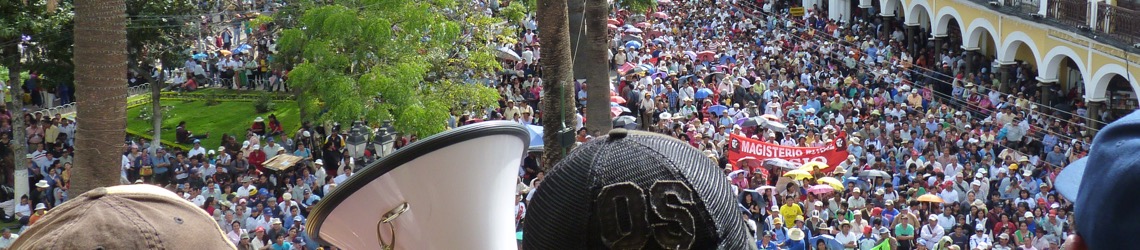
Tick-tock coverage of the overthrow of Evo Morales: What we know now

A flood of new declarations from politicians and official involved in the 2019 ouster of Evo Morales have come out. These declarations have accelerated because the matter is now the subject of a criminal investigation that led to the arrest of Jeanine Áñez. This post revises and updates my January 2020 coverage of accounts of Morales’ overthrow; the original text remains online there. Since both posts are intended to gather historical evidence and illuminate critical questions, I‘m avoiding using the word “coup d‘ètat” here. Readers are invited to apply their own definition to the mounting facts, as I have elsewhere.

What’s at stake

Without a doubt, the post-electoral protests against President Evo Morales, his sudden resignation under pressure from both protesters and the military, and the unexpected succession of Jeanine Áñez (previously, second vice president of the Senate) are the most significant events of Bolivian political life in 2019. The hinge point of these events was the dramatic week stretching from November 8 to 15, during which the police and military joined protesters as central actors; significant transactions occurred behind closed doors; acts of violence and arson targeted politicians on all sides; uncertainty surrounded presidential succession; and finally, a remobilized military killed a shocking number of people in four dramatic days.

I want to offer here some detailed accounts of what happened during that pivotal week and lay out the crucial questions as to whether, when, and how the overthrow of Morales was planned.

Why did an inexperienced junior senator with no mandate get empowered to lead a disastrous coup, unleashing the deadliest month in 15 years in Bolivian politics? How did a military “suggestion” claiming to head off bloodshed so rapidly lead to operations against civilians that cost many more lives than had been lost in the previous three years (let alone the three weeks of protest since the election)? In short, to what extent was a unified planning process (what we might call a coup plot) at the heart of this political transition?

Put differently, do we understand Evo Morales’ overthrow, Jeanine Áñez’s succession, and the military shakeup that followed the result of:

  • The foresight and planning of a small circle of actors. Did someone in the civic movement set her up? Work out a deal with those in the military who craved a crackdown? There are real signs of premeditation, coordination, and alliances among political forces and people within the military who might have a crackdown as a goal.
  • A convergence of fearful choices that led to a disastrous transition. Did the military leadership believe a quick transition would de-escalate an increasingly deadly confrontation on November 10? Did multiple actors think confirming someone, any civilian at all, was preferable to prolonging interim military rule and nightly violence on November 12? The real consequences of fear, urgency, distrust, violence, and reactions to violence that led people to act without considering the worst-case scenario that could emerge.

Since plotting is necessarily a closed-door activity, we couldn’t fully know the answers to these questions on November 10 or 15. But since these are matters of public concern and the principal actors are talking to journalists, we are getting more and more details (all possibly filtered through self-justifications and political ambitions) about what exactly happened when. What follows is an evolving list of sources for those of us trying to understand what happened in detail.

Read More »

Note from the field: Bolivia redefines its history [2010]

I’m reposting this fieldwork newsletter account that I wrote in 2010 because it feels relevant to current conversations about narrating American history.

Imagine for a moment the following scenario:

There’s a formal diplomatic function between the United States and France, in which the visiting French president is honoring a hero of the Franco-American effort during the American Revolutionary War. Military and civil honors are being accorded to Thomas Jefferson, say, or the Marquis de Lafayette.* The French President is there, before a special session of the United States Congress. Picture the well of the House, the assembled guests, the audience of Americans watching on video screens on the streets outside the Capitol. The first to speak, on behalf of the United States Government is Joe Biden. He strides to the podium, welcomes the French President, and begins a speech. He remembers the revolutionary era as a period of liberation for the American continent, a key point in a still unfinished process. Then he says we must think of the revolutionary period as two distinct struggles for independence and self determination: the American Revolution we all know, extending through the War of 1812; and the struggles Native Americans fought against invasion during the same decades. He says we must remember as American heroes Tecumseh as well as Jefferson, Blackhawk as much as Lafayette. For good measure, he adds Nat Turner to the list. The Age of Liberation we celebrate as the birth of our nation, he argues, will only be fulfilled when Native peoples have self governance and Blacks have ended oppression and racism against them.

I’m sure I can imagine this scene. You can too; hopefully, you just have. But those words out of the mouth of our current President or Vice President probably seem impossible. At least, I’m confident I won’t hear them. And I’m confident that if I did hear them, I would break into tears with the unexpected justice of the situation.

I mention this scenario not just because it represents a good goal, or underscores the place of talking about history in righting historic wrongs. I mention it most of all because changing the national context, it is exactly what I witnessed on the 26th of March in Sucre. The figure in question was not Thomas Jefferson or Lafayette, but Juana Azurduy de Padilla, a mestiza military commander in the wars against the Spanish from 1809 to 1825. Born in the town of Chuquisaca (now named Sucre after her contemporary military and political leader), she fought for the independence of both Argentina and Bolivia in a war in which she saw four of her sons and her husband die. It was also a war during which she gave birth to a daughter. Azurduy is embraced by nationalists and pro-indigenous activists, as an Argentine and a Bolivian, as a woman and as a soldier.

The speech was given not by Joe Biden, of course, but by Bolivian Vice President Álvaro García Linera. Before becoming Vice President, he was a partisan of a guerrilla movement of the 1980s and 90s, a professor of sociology, and a moving force within a leftist theory collective in La Paz called Comuna.

It is one thing to sit in a graduate classroom and learn about the extended history of South America’s Age of Revolution, to learn how the indigenous revolts of the 1770s and 1780s presaged the independence wars of the early 19th century. It is a different and altogether remarkable thing to watch a country’s national leadership embrace that narrative as a way of understanding its past. One of the better aspects of fieldwork has been the opportunity to do both.

* Military commander and diplomat Lafayette was in fact given honorary American citizenship in 2002. I won’t ask you to imagine the above scenario with Dick Cheney playing the role of García Linera.

Arturo Murillo began corruption scheme in first week of Áñez regime

On May 21 and 22, the United States government arrested Arturo Carlos Murillo Prijic, the former minister of government under the interim government of Jeanine Áñez, his chief of staff Sergio Rodrigo Mendez Mendizabal, and three of Murillo’s long-time associates. These include Murillo’s childhood friend Luis Berkman Littman, his son Bryan Samuel Berkman, and Argentine lawyer Philip Lichtenfield. The men are charged with money laundering and corrupt practices surrounding the Áñez government’s purchase of riot control munitions.

Based on the facts laid out in the indictment (Murillo is “Co-Conspirator 1”), confirmed by prior document releases in Bolivia since June 2020, this scheme is best understood not as an arms company bribing Murillo and Mendez to secure a contract, but rather the joint effort by the men involved to interpose the Berkmans’ shell company, Bravo Tactical Solutions, into an existing arms supply arrangement between a Brazilian arms manufacturer and the Bolivian government. This was done at a substantial mark-up, generating between $2 and $3 million, some $600 thousand of which were recycled back to Mendez, Murillo, and an unnamed Ministry of Defense official.

Since the public indictment provides a detailed timeline, we now know that this corrupt scheme originated in the first week of the Áñez government, before the government was even recognized by opponents, while blood was still on the ground from the Sacaba massacre, and before the second mass killing at Senkata.

I think about this crisis moment all the time; I’ve studied it intensely to understand who did what when, how hardline officials came in with guns blazing, killing more with the police and military in ten days than Bolivian security forces had killed in the past decade of policing protests. What I had not imagined, however, was that this first week was also a time for them to think about profiteering.

Arturo Murillo’s dramatic week

The week of November 10th through 16th, 2019, was a momentous one for Bolivia and for conservative hardliner Arturo Murillo.

Read More »